Ozark Cooling

AC unit frozen up in Rogers, AR

Step 1 of 3: Equipment

Why is my AC unit frozen up?

You went out to check on the unit and found ice on the lines or the coil itself, maybe even the whole outdoor unit coated. The air coming through the vents might be weak or warm. It's alarming to see ice form on something that's supposed to be cooling your house, especially during a long Rogers summer when you can't afford to be without it for long.

It means airflow across the coil is too low, or the refrigerant charge is off

A frozen coil almost always comes down to one of two things. Either not enough air is moving across it, usually from a dirty filter, closed vents or a failing blower motor, or the refrigerant charge is low, often from a leak. Either way, the coil gets too cold and the moisture in the air freezes right onto it. Once ice builds up, it blocks airflow even more, so the problem gets worse the longer the system runs. Running the unit with the thermostat set to cool only adds to the ice. The fix depends on which cause is behind it, and that takes a licensed contractor to check the airflow, the charge and the coil itself before the system can run safely again.


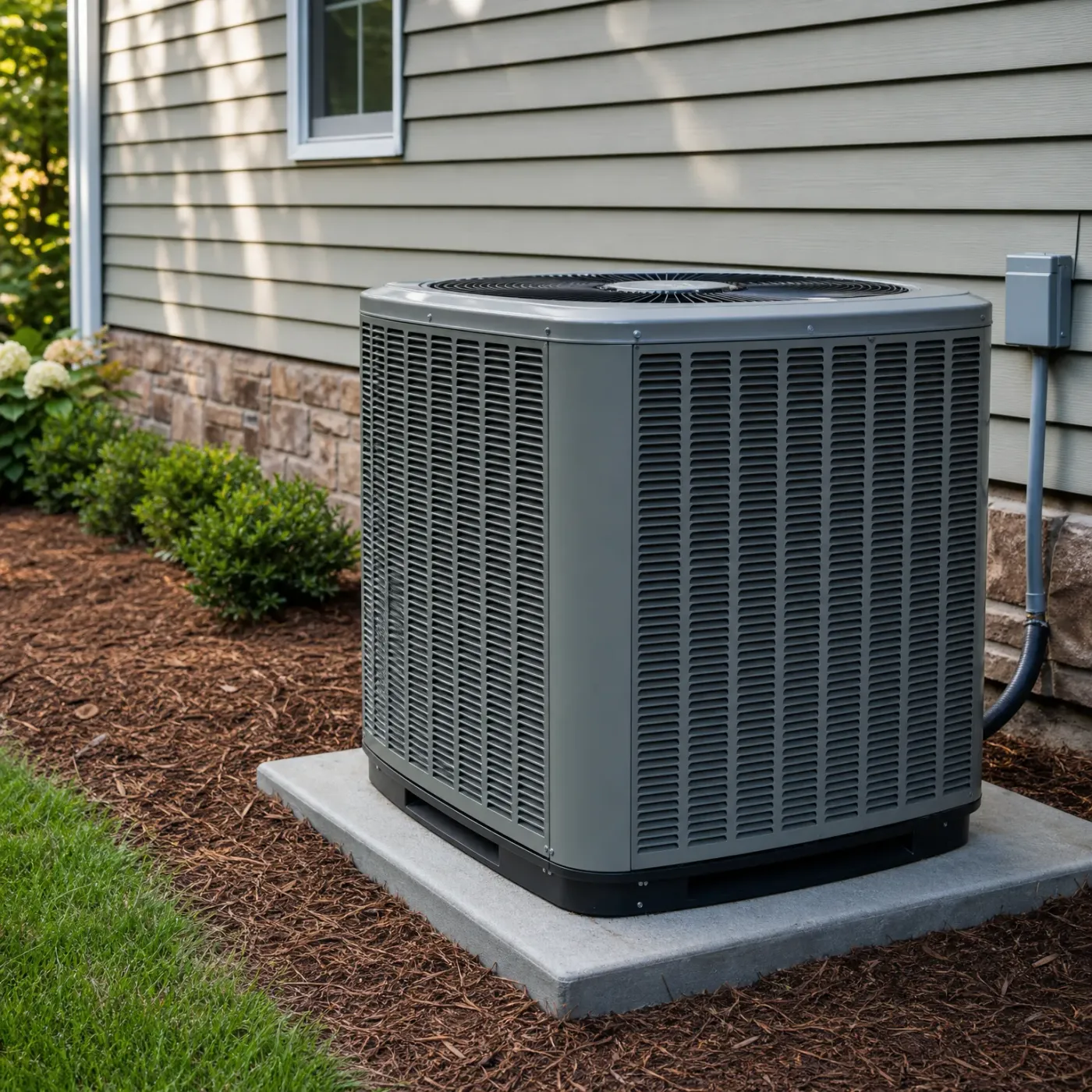
A gray outdoor air conditioning condenser unit on a composite pad beside a house with horizontal lap siding, with a wall-mounted disconnect box, refrigerant lines, and a wooden fence and shrubs to the left.
The lines run to the disconnect box with no ice anywhere in sight, and the unit cycles on and off the way it's supposed to.
An outdoor air conditioning condenser unit on a concrete pad beside a house with light vinyl siding, with electrical conduit running to a wall-mounted disconnect box and a shrub in mulch to the right.
The coil is coated white and the lines are sweating or iced over, a sign the system needs a trained eye before it runs again.

The coil inside your air handler is supposed to stay cold enough to pull moisture and heat out of the air, but not so cold that it drops below freezing. When something limits the heat moving across it, usually weak airflow or a low refrigerant charge, the coil's surface temperature falls and the moisture it collects turns to ice instead of running off into the drain pan. That first bit of ice makes things worse, because ice blocks airflow too, so the problem feeds itself until the coil is solid white and the air coming through your vents is barely cool. A blocked filter, a closed damper, or a blower motor that's lost power can all choke off airflow the same way. Shutting the system off and switching the thermostat fan to on helps melt what's built up, but that only clears the ice. It won't tell you why the coil got cold enough to freeze in the first place, and running it again without knowing that just starts the cycle over.


Why the Coil Freezes

  • Warm air moving across a cold coil drops its moisture there, and if the coil runs too cold that moisture freezes instead of draining off.
  • Low refrigerant charge is a common cause, since it lets the coil get colder than it should and ice builds from there.
  • A dirty filter or blocked return cuts off the airflow the coil needs to stay above freezing, so the ice spreads from the coil outward.
  • Once ice coats the coil it acts as insulation, so the system keeps running but barely cools the air passing through.
  • Running the system with the thermostat fan set to on, rather than auto, can help melt the ice faster once it's shut down.
  • A failing blower motor or a closed duct damper can starve the coil of air the same way a dirty filter does.
A gray-haired bearded man in a dark knit sweater sits on a light gray sofa in a sunlit living room, looking to his left, with a framed artwork, a potted palm, and a curtained glass door behind him.
A middle-aged man in a dark green sweater sits on a light grey sofa looking toward a sunlit window, with a wooden shelving unit, lamp and potted plants in the background.
A man in a dark green sweater sits on a light grey sofa in a sunlit living room, looking to his left, with a shelving unit, houseplants, framed art and a large window behind him.
A gray-haired bearded man in a dark green sweater sits on a light gray sofa in a sunlit living room with a potted plant, framed picture, and dark shelving in the background.
A gray outdoor air conditioner condenser unit on a concrete pad beside a house with horizontal siding and a stone veneer base, surrounded by mulch, shrubs and grass.

Get matched with an air conditioner pro in Benton County

A licensed pro who works in Benton County gets your request.

A Benton County pro who repairs air conditioners gets your request.

Get one local pro

No charge to send it. You decide if you hire them.

Let It Thaw or Call It Off

Keep it running

  • You turned the system off as soon as you saw ice, which gives the coil a chance to thaw before anyone opens the cabinet.
  • The thermostat is set where it's always been and the unit still ran a full cycle before you noticed anything wrong.
  • Air still comes through the vents, even if it's weaker than usual, which points to a coil that's partly iced rather than fully blocked.
  • The outdoor unit sounds normal and the fan turns freely when you check it.
  • Nothing around the unit smells burnt and the breaker hasn't tripped.

Shut it down now

  • Ice covers the whole coil or has spread onto the copper lines running to the outdoor unit.
  • The air from the vents has gone from weak to barely moving at all, or stopped.
  • Water is pooling under the indoor unit or dripping from the ceiling near a vent.
  • You've already thawed it once and the ice came back within a day or two.
  • The outdoor fan has stopped turning or is making a grinding or clicking noise.
  • The system has been running nonstop for hours without the house cooling down.
A gray outdoor air conditioning condenser unit sits on a concrete pad beside a house with horizontal siding, connected by insulated lines to a wall-mounted disconnect box, with a shrub and gravel bed to the right.

Running clean

The coil fins stay clear and the unit cycles quietly on its pad. Air moves freely through the condenser, heat transfers off the refrigerant the way it should, and nothing on the lines or the cabinet shows frost.

An outdoor air conditioning condenser unit sits on a concrete pad beside a house with horizontal vinyl siding, with a gray electrical disconnect box and insulated refrigerant line on the wall above, surrounded by bare mulched ground.

Caked in grime

Dirt packed into the fins blocks airflow across the coil, and a coil that can't shed heat properly runs colder than it should. That's one path to the ice you're seeing, and it won't clear on its own once the buildup is this heavy.
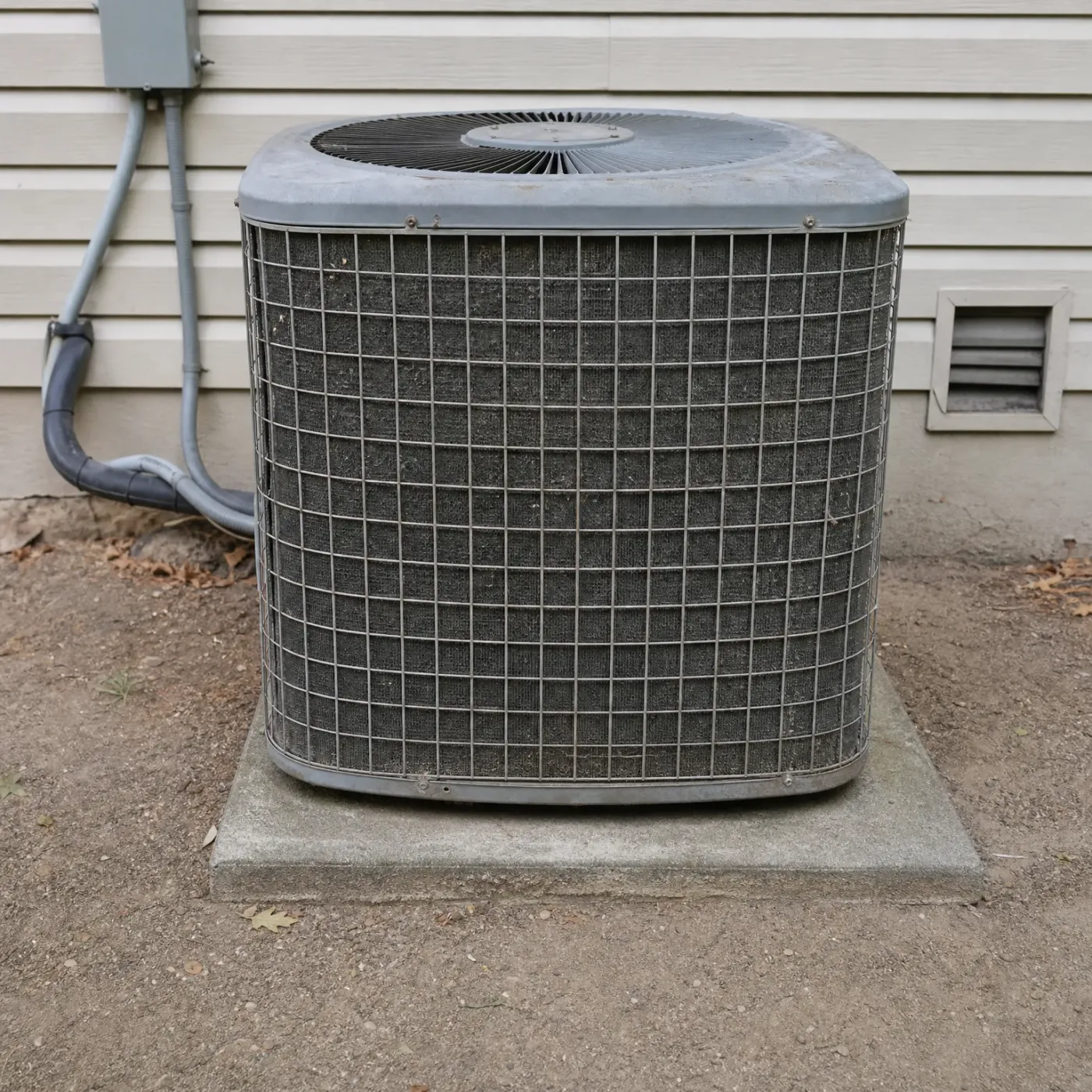
An outdoor air conditioning condenser unit with a dirty mesh coil guard sits on a concrete pad beside a house with horizontal lap siding, a wall vent, and conduit running to an electrical disconnect box.
Before you get your air conditioner repair
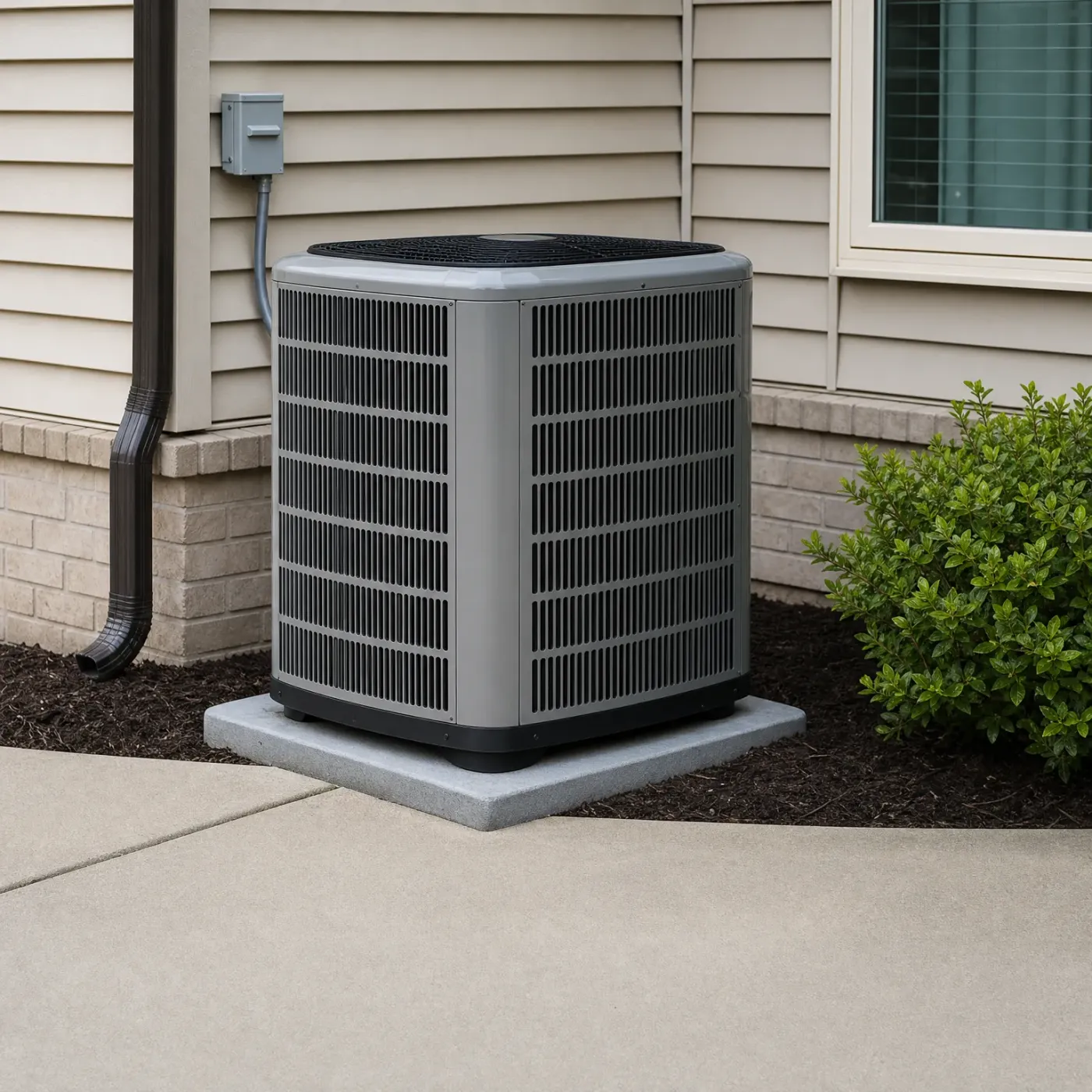
A gray outdoor air conditioning condenser unit on a concrete pad beside a house with horizontal vinyl siding, a brick foundation, downspout, electrical disconnect box, mulch bed and a green shrub.
After you get your air conditioner repair

Why thawing it out first matters

Shutting the system off and letting the ice melt on its own tells a contractor more than a frozen coil ever could. Once it's clear, airflow and refrigerant pressure can actually be checked instead of guessed at. A coil that's still iced over hides the dirty filter, the bent fin, or the low charge underneath it. Running the blower alone, without the compressor, speeds up the thaw without pushing more warm, moist air across ice that's still forming. An hour or two of patience now usually means one visit instead of two, and it keeps whoever opens that cabinet from working blind.

What a frozen coil costs the compressor

The compressor is built to pump refrigerant gas, not liquid. When ice forms on the coil, refrigerant can't absorb heat the way it should and some of it heads back to the compressor still partly liquid. That's a load the compressor wasn't built to handle, and it's the most expensive part in the whole system to replace. A unit that keeps running while frozen, cycle after cycle, puts that part at risk every time it turns on. Catching it early and shutting the system down protects the one component that's hardest to swap out.

Cooling runs May through September

Your AC runs from May into September here, close to five months of steady work a year. That much runtime means a coil already running low on refrigerant or short on airflow has plenty of chances to ice over before summer's out.

NOAA nClimDiv 1991-2020

A frozen coil means something in the system is already off, either airflow or refrigerant charge, and running the unit again before that's fixed just builds the ice back up. Shut it off, let it thaw, and get someone out who can check pressures and airflow properly. Benton County air conditioners see a long stretch of hard use every year, from May into September, and a contractor working on them that whole stretch has seen this particular problem enough times to know where to look first. When you request service through this page, you're matched with one licensed contractor local to Rogers, not a handful of companies competing for your callback. That means one visit, one person who already knows what tends to fail on units running this hard in this heat, and a diagnosis based on what they find once the coil's clear rather than a guess made over the phone.

Interior corner showing a white painted column with paneled trim and chair rail meeting a wall with baseboard, beside light wood cabinetry with black bar pulls and a ceramic vase, over dark hardwood flooring.
Interior corner with a white-framed window showing green foliage, a pale wall with baseboard, light oak plank flooring, and a wooden cabinet with a dark ceramic vase on top.
A rustic wooden bench against a pale wall holds a weathered ceramic vase with leafy branches, below a black cone wall sconce, beside a window with sunlight falling on the wood floor.
A bathroom vanity with wood cabinets and a white marble countertop, black widespread faucet and undermount sink, a wood-framed mirror, a fabric-shaded wall sconce, a ceramic vase with green branches, and a window with white blinds.
Empty room corner with taupe walls, white wainscot paneling, crown molding, dark wood floor, and a double-hung window showing green foliage outside.

A local pro for your air conditioner repair

A licensed pro who repairs air conditioners in Benton County gets your request.

Find a licensed pro

There's no charge for the request.