Tell us about the job
Takes about a minute. No obligation.
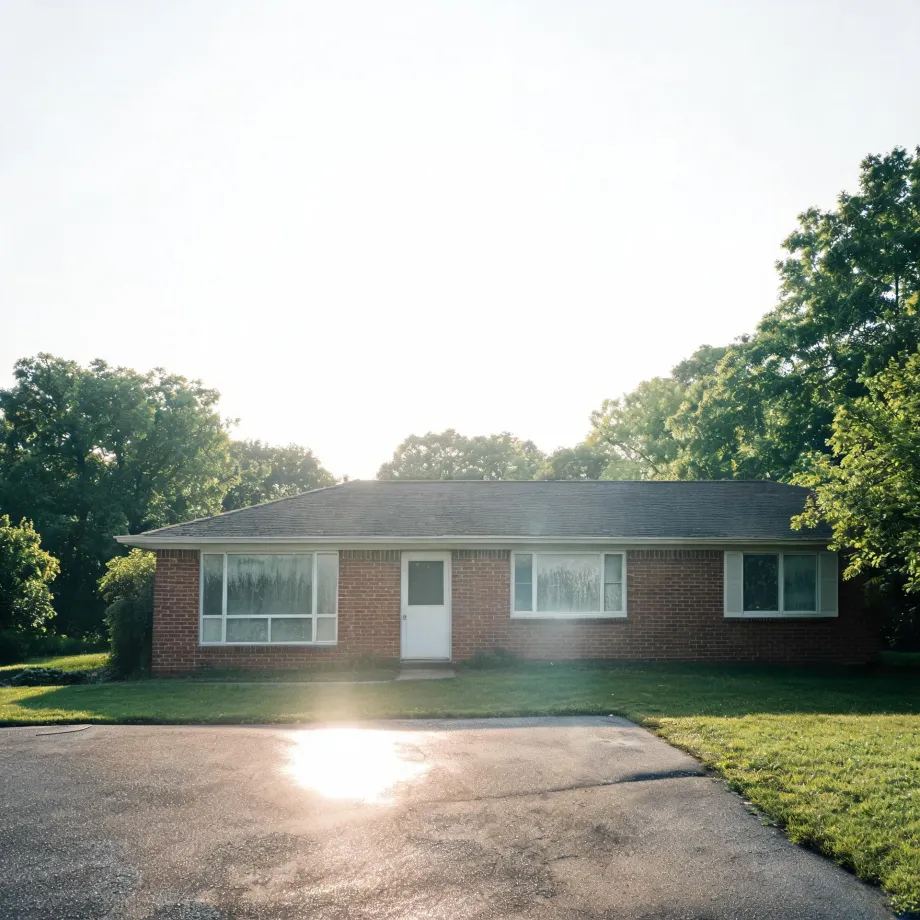
A contractor quoting a central AC repair in Madison County has to account for what the compressor and condenser fan have actually been through before landing on a diagnosis. Homes in Madison County, AR run cooling about four months a year, from June through September. Across those summers, the compressor accumulates cycling wear on its contactor and capacitor, which are the parts that take the hit every time the unit starts under load. A system that ran undersized from the start shows that wear earlier, and a contractor checking those components first is doing so for a reason tied directly to how the equipment has been used, not how old it is.
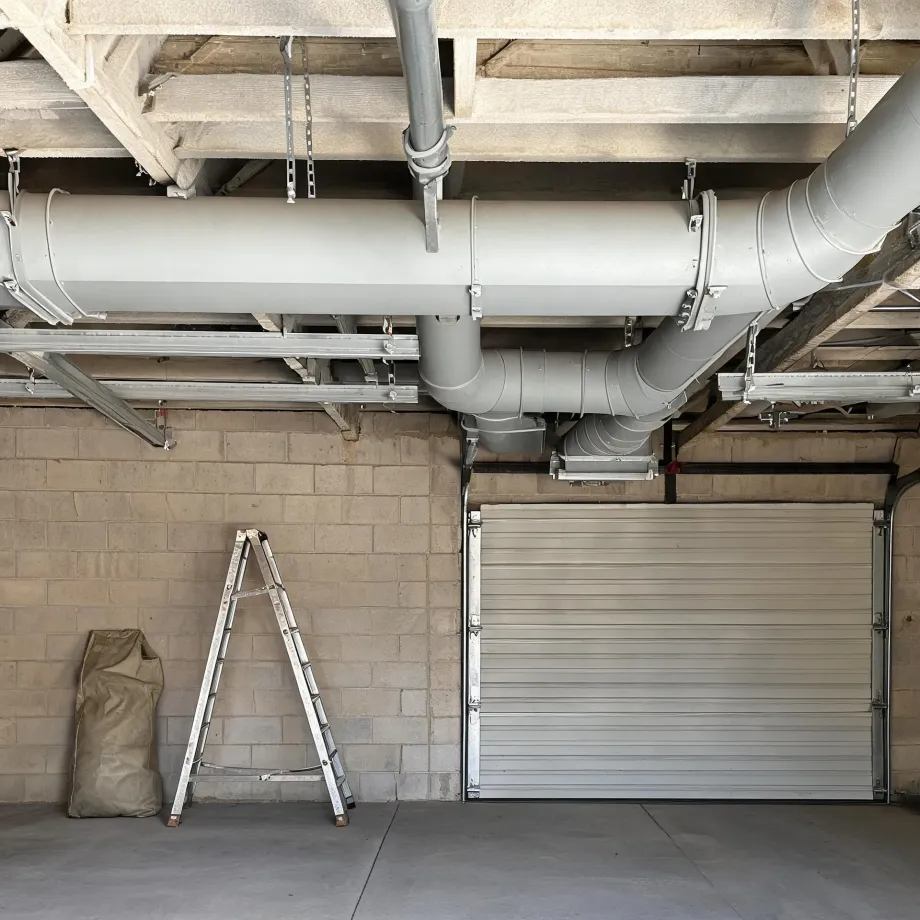
Much of the housing stock here was built around systems that no longer exist, and the central AC running in a house today is not what the house was originally cooled by. Half the homes in Madison County, Arkansas were built in 1990 or earlier (2020-2024 ACS 5-year). When a unit opens up, what a contractor finds are the cumulative decisions of whoever replaced or patched the equipment since then: refrigerant lines rerouted, components sourced from different generations, repairs made with whatever was available. The repair question in a house like this is whether the parts the current system takes are still made and stocked, not whether the shell around it is sound.
The Parts of a Central AC a Contractor Checks First
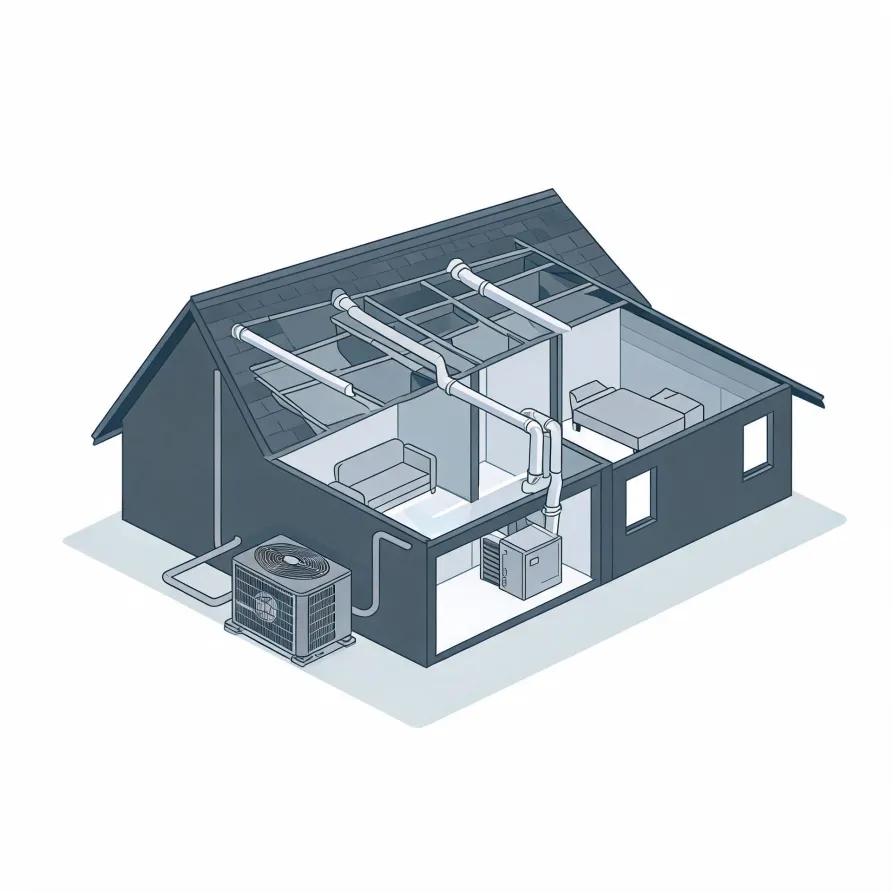
The outdoor condenser unit sits outside the house, usually on a concrete pad along an exterior wall, and it carries the compressor, the condenser coil, and the fan that pushes heat out of the refrigerant. When the system runs warm, makes noise, or fails to start, those components are where a contractor looks first. A failed compressor or a fouled coil will stop the whole system cold.
Inside, the air handler holds the evaporator coil and the blower that pulls warm air across it. The refrigerant line set runs between the two units, and the thermostat on the wall controls when everything runs. A weak blower, a frozen evaporator coil, a refrigerant leak in the line set, or a faulty thermostat signal can each produce symptoms that look alike until a contractor traces the fault to its source.
The drawing shows a typical central AC layout, and a licensed contractor will determine which components and conditions apply to your specific house.
Find a contractor in Madison CountyMadison County, Arkansas, by the numbers
50 severe weather events were recorded in Madison County, Arkansas between 2015 and 2024.
NOAA National Centers for Environmental Information, Storm Events Database, bulk CSV export, events 2015-01-01 through 2024-12-31.Half the homes in Madison County, Arkansas were built in 1990 or earlier (2020-2024 ACS 5-year).
U.S. Census Bureau, 2020-2024 American Community Survey 5-Year EstimatesMadison County, Arkansas holds 7,744 housing units (2020-2024 ACS 5-year).
U.S. Census Bureau, 2020-2024 American Community Survey 5-Year EstimatesOwners occupy 79.5% of the occupied homes in Madison County, Arkansas (2020-2024 ACS 5-year).
U.S. Census Bureau, 2020-2024 American Community Survey 5-Year EstimatesCodes & Standards Behind Central AC Repair in Madison County, Arkansas10 sourced rules and standards
What HVAC Repair Looks Like in Madison County
Split-system central air conditioners rated below 45,000 Btu/h manufactured on or after January 1, 2023 must meet a federal minimum of 13.4 SEER2.
Split-system central air conditioners rated at or above 45,000 Btu/h manufactured on or after January 1, 2023 must meet a federal minimum of 13.4 SEER2.
Split-system central air conditioners manufactured between January 1, 2015 and December 31, 2022 had to meet 13 SEER, the metric that preceded SEER2.
Single-package central air conditioners manufactured on or after January 1, 2023 must meet a federal minimum of 13.4 SEER2.
Space-constrained central air conditioners manufactured on or after January 1, 2023 must meet a federal minimum of 11.7 SEER2.
Federal efficiency standards for split-system central air conditioners and heat pumps are set on each certified combination of outdoor unit and indoor coil rather than on the outdoor unit alone.
Residential and light commercial air conditioning and heat pump systems assembled in the field, including mini-splits and unitary systems, may not be installed on or after January 1, 2025 using a refrigerant with a global warming potential above 700.
A field-assembled system whose specified components were all manufactured or imported before January 1, 2025 carries no installation compliance date under the refrigerant restrictions and may still be installed.
Licensing Rules for Madison County, Arkansas
An Arkansas HVACR licence is good across the state: no city or county may require its own licence to do HVACR work, though local permits and inspections still apply.
Arkansas requires an HVACR licence or registration: it is unlawful to do HVACR work without the appropriate one unless the chapter exempts you.
Severe Weather Events in Madison County
Storm activity puts real stress on cooling equipment: power surges, prolonged run cycles, and sharp pressure swings all add up over time. How much your system has weathered is a local question, and repair needs in Madison County reflect what the weather here actually does.
50 severe weather events, 2015–2024. Source: NOAA National Centers for Environmental Information, Storm Events Database.