
Why your upstairs stays hot in Arkansas summers
Why is it always hotter upstairs in my house in summer?
It happens every summer. The downstairs feels fine, but by afternoon the upstairs bedrooms are ten degrees warmer, and the air conditioner never seems to catch up. With the thick heat and humidity Arkansas gets from June through September, that gap upstairs can make the whole second floor hard to sleep in once the sun goes down.
Heat rises, and your system may not be sized or balanced to push enough cold air up there
Warm air rises and settles on the upper floor, while cool air sinks toward the ground level, so the top of the house is always working against that pull. A single thermostat downstairs also means the system shuts off once the first floor hits the set temperature, even if the upstairs is still warm. If the ductwork feeding the second floor is too small, has a weak run, or the supply vents are blocked or closed, the air that does reach upstairs can't keep up with Arkansas's summer heat and humidity. A failing capacitor or low refrigerant charge makes this worse, since the system loses cooling power right when the upstairs needs the most.




Warm air sits high, and it collects on the second floor all day long. The thermostat is usually downstairs, so it only knows what the air around it feels like. Once that spot hits the set temperature, the system shuts off, even if the upstairs is still climbing. Most homes run one blower off one return system, and air takes the easiest path. If the downstairs ducts are shorter or less restrictive, more air goes there and the upstairs gets what's left. The attic adds to this. Through the afternoon it heats up, and that heat pushes down through the ceiling into the rooms directly below it, usually the upstairs bedrooms. Even a correctly sized system can fall short here if the ducts feeding those rooms are too narrow or have to travel too far from the air handler to deliver full airflow. Closing doors and vents upstairs to save energy actually works against the system, cutting off the air those rooms need to cool down at all.
Why the upstairs runs behind
- Heat rises, so the upstairs collects warm air all day while the thermostat downstairs reads a comfortable temperature and tells the system to stop.
- One thermostat runs the whole house, so it can only react to the air around it, not the air trapped on the second floor.
- If both floors share one return duct system, the upstairs often gets less airflow than it needs because the blower sends more air where the ducts are shorter or less restrictive.
- Attic heat pushes down through the ceiling all afternoon, and that load lands hardest on the rooms right underneath the attic.
- A system sized for the whole house can still leave the upstairs short if the ducts feeding it are undersized or run a long way from the air handler.
- Closed doors and vents upstairs cut off airflow the rooms need, even though it feels like it should save energy.


Matched to your air conditioner job

Send the request and finding a pro stops being your problem.
It costs nothing to send, and you don't have to hire anyone.
You already know which afternoons are worst. The upstairs bedrooms hold onto the day's heat long after the sun drops, so you're running the air conditioner into the evening just to make the upper floor bearable for sleep. Meanwhile the downstairs thermostat says everything's fine, so the system short cycles instead of running the longer stretch the upstairs actually needs. Electricity here is cheap, but a unit that's struggling, low on refrigerant, a weak capacitor, a blower not moving enough air, still runs longer than it should to chase a temperature it can't reach, and that shows up on the bill even at a low rate. Left alone, that extra strain is what turns a small, cheap fix into a compressor problem or a system that can't keep up at all by August. Checking it now, while it's still just a comfort problem and not a breakdown, is the same habit that keeps a $30 part from becoming a $3,000 one.


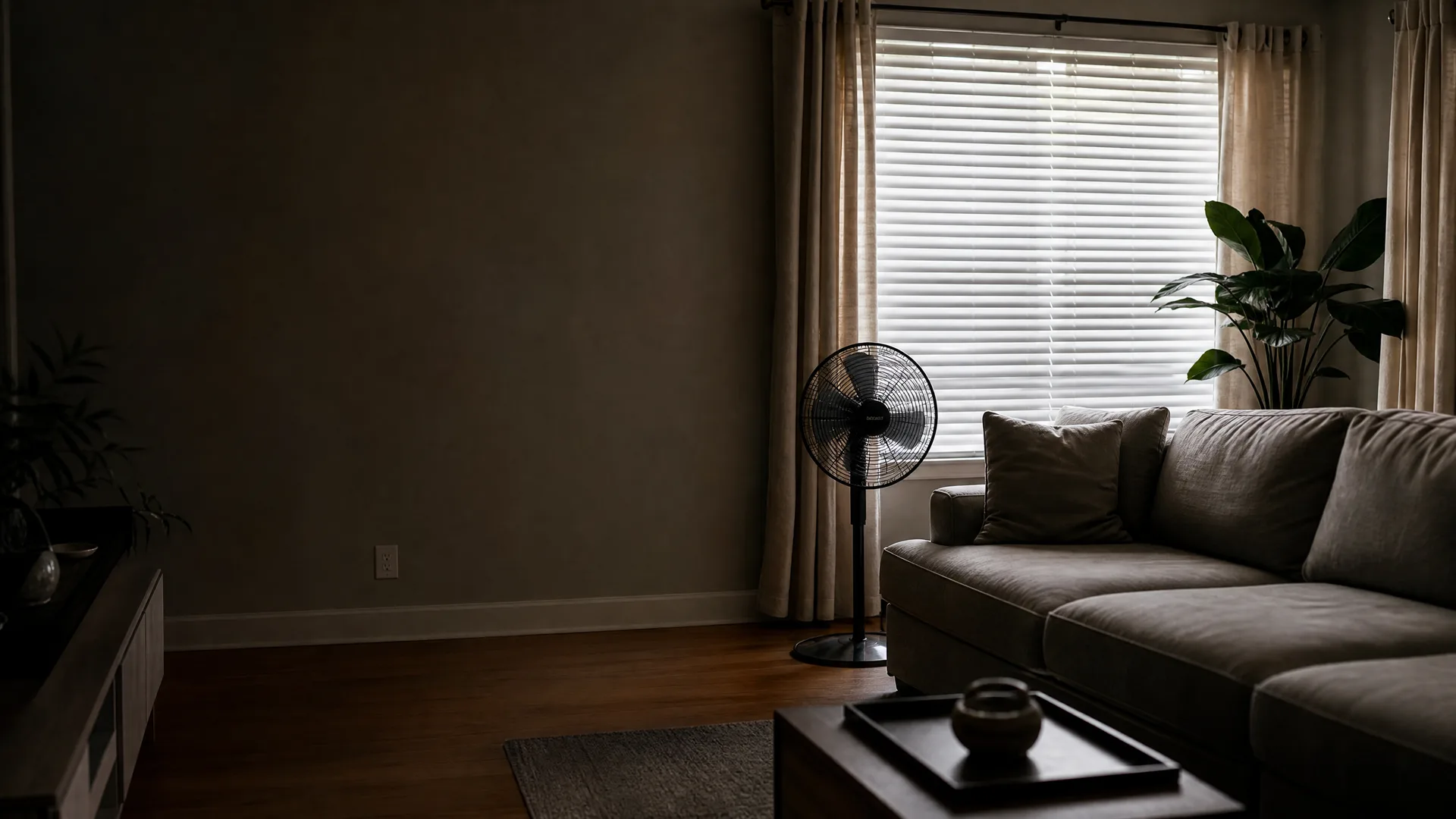
It's a little after three on a July afternoon. You've pulled the blinds in the living room against the sun, and the floor fan by the couch is running on high, pointed at nobody in particular. The air conditioner is on, you can hear it, but down here it's holding. You picked this room on purpose. Upstairs the hallway is already warmer than where you're sitting, and you know by six it'll be worse. You're not going up there yet. For now you've got the blinds, the fan, and a room that's doing its job while the one above it waits its turn.
Power costs 12.87 cents per kilowatt-hour statewide
At 12.87 cents a kilowatt-hour, running the air conditioner longer to chase down a hot upstairs adds up fast. A system that's low on refrigerant or losing airflow has to run far more than it should just to hold the line, and you pay for every extra hour of that.
EIA-861 2025 statewide residential average
What the Hot Upstairs Tells You
- An upstairs that stays hot while downstairs is fine almost always points to the system itself, not the house.
- Low refrigerant, a struggling condenser, or blocked airflow all show up first as an upstairs that never quite cools.
- The thermostat downstairs will keep telling the system to rest long before the upstairs catches up.
- A contractor can check refrigerant charge, airflow, and the condenser's output to find which one is behind it.
- Once you send the form, a contractor who handles this reaches out to you, and the search for who to call is off your plate.
The pattern itself is the diagnosis. A house where downstairs is comfortable and upstairs never gets there isn't a layout problem, it's a system that can't keep up once the thermostat downstairs says it's satisfied. That thermostat only knows the air around it. It calls for the system to rest while the second floor is still holding onto the afternoon's heat, and nothing corrects for that on its own. Low refrigerant means less heat gets carried out of the house, so the top floor loses that fight first. A condenser that's aging or losing output struggles to push cooling far enough to reach the upstairs at all. Blocked airflow, whether at a return, a duct, or a dirty coil, starves the upper rooms before it ever shows downstairs. These are mechanical problems with mechanical fixes. A contractor who checks the refrigerant charge, measures airflow, and tests what the condenser is actually putting out can find which of these is behind your upstairs heat, and most of the time it's more than one working against you at once. You don't have to figure out which. You don't have to live with another summer of a floor fan pointed at nobody and bedrooms that don't cool down until midnight. Send the form, and finding the right contractor for this stops being something you have to manage yourself.
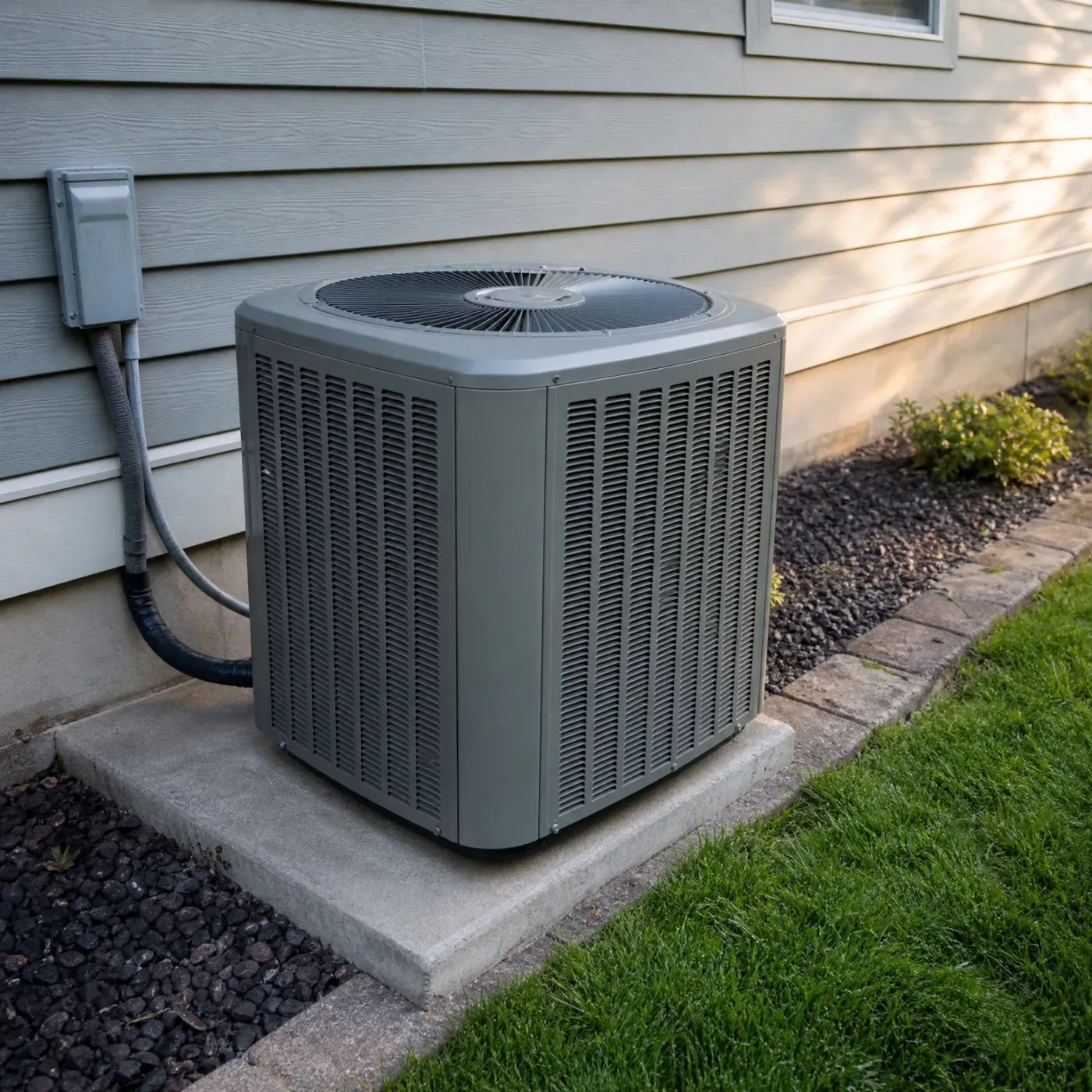
An air conditioner pro near you
After this form, you can stop searching for an air conditioner pro.
No charge to send it. You decide if you hire them.