
When to replace an AC unit in Benton, AR

Your new air conditioner project goes to an installer who works in Saline County.

Get matched

How do I know when to replace my AC unit in Benton, AR?

Your AC has been running long hours every summer in Benton, and now it's either struggling to keep up, running up your power bill, or needing repairs more often. You're trying to figure out if it's worth fixing again or if it makes more sense to put that money toward a new unit instead. With summers here stretching on for months, the answer matters more than it would somewhere milder.

Replace it once repairs get frequent or the unit is past 12 to 15 years old

An AC unit working hard every summer in Saline County wears faster than one running a few weeks a year. Most units start breaking down more often once they pass 12 to 15 years, and parts for older units get harder to find. If a repair costs close to half what a new unit would, or the unit has needed two or more repairs in the last year, replacing it usually makes more sense than paying to patch it again. A unit that can't keep the house cool on the hottest days, or one where the power bill keeps climbing, is also telling you it's losing efficiency. Power here is cheap, so a jump in your bill from the AC itself is a clear sign.

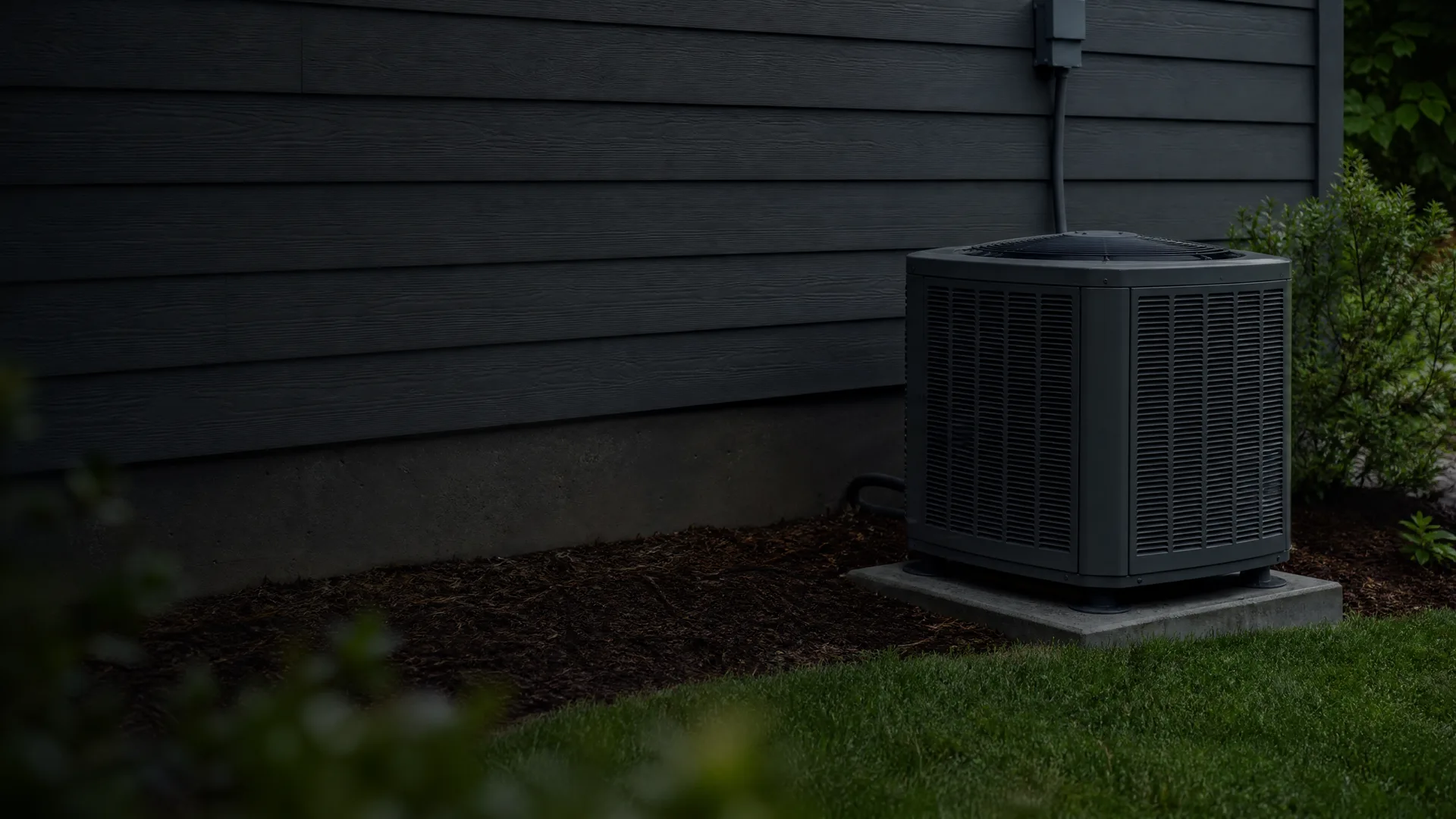
A gray outdoor air conditioner condenser unit sits on a concrete pad beside a house with horizontal lap siding, with conduit and an electrical disconnect box on the wall, dark mulch and a shrub to the left, and a concrete walkway in the foreground.

Still doing the job

Your unit cools the house on the hottest days without running nonstop. The compressor kicks on, the air coming out of the vents is cold, and the power bill looks like it usually does in July and August. Repairs, if you've needed any, have been minor and spaced years apart.


An outdoor air conditioning condenser unit on a concrete pad beside a house with horizontal lap siding, with a shrub and mulch bed to the left and conduit and a small electrical box on the wall to the right.

Starting to fail you

The grilles are caked with dirt and the cabinet shows its age. It cycles longer to hit the same temperature, or it short cycles and never quite gets there. You've called for a repair more than once this year, and the bill keeps creeping up even though you haven't changed the thermostat.

An older man with gray hair and a beard, wearing a dark coat dusted with snow, stands smiling in a doorway of a warmly lit home with a sofa, lamp and window visible behind him.
An older man with grey hair and a beard, wearing a dark coat dusted with snow, stands in a dimly lit entryway with a ceiling lamp, a side table with two shaded lamps, and a lit fireplace visible in a room beyond.
A bearded older man in a dark snow-dusted coat and scarf stands just inside a home's front door, with a lamp-lit room and snowy window visible behind him.
An older man with gray hair and a beard stands in a doorway of a home, wearing a dark coat dusted with snow, with a lit fireplace and lamp visible in the blurred room behind him.

A unit that's low on refrigerant isn't just low on refrigerant. Refrigerant doesn't get used up, so a system that's lost its charge has a leak somewhere in the coil or the line set.

That leak will still be there after a recharge, and the refrigerant will work its way back out again. Replacing the unit stops the problem instead of paying to repeat it.

An outdoor air conditioner condenser unit on a gray composite pad beside a house with horizontal siding, a concrete foundation, a basement window, and a conduit and disconnect box on the wall.
Before you get your air conditioner installation
A gray outdoor air conditioning condenser unit on a concrete pad beside a house with horizontal lap siding and a stone veneer base, with a disconnect box and conduit on the wall, mulch bed and shrub to the right, and mowed grass in the foreground.
After you get your air conditioner installation

What an aging AC costs you

A unit on its way out shows up in the power bill before it shows up anywhere else. If August's bill runs noticeably higher than last year's for the same kind of heat, the system is working harder to do the same job, and that difference repeats every summer it stays in the house. Add in a service call or two a year, parts and the trip charge both, and the money spent keeping the old unit alive starts to rival what a new one would have cost to run. None of that shows up as one big number. It shows up as a summer that costs more than the last one did, for a house that hasn't changed.

What it risks if you wait

A system that's struggling in July doesn't get a break in August. Saline County summers run long, and a compressor working past its capacity in the first heat wave is still working past it in the last one. If it fails outright, it tends to happen on the hottest day, when it's working hardest, not on a mild one. That leaves you without cooling until someone can get a new unit in, in a house that holds heat fast once the AC stops. Waiting on a unit that's already struggling doesn't buy comfort in the meantime. It buys a summer of higher bills followed by the same decision, made in a hurry.

A woman wrapped in a cream textured blanket sits in an armchair beside a lit lamp and a dark window, with an open book in the foreground.
A bearded man in a plaid flannel shirt stands indoors looking out a frost-covered window, with a steaming dark blue mug on the wooden sill and snow-covered trees outside.

Get matched with an air conditioner pro in Saline County

A system that's marginal in April won't hold up in August, when a Saline County afternoon sits in the mid 90s with the humidity thick enough to feel. That's the stretch that finds every weakness, and it's also when a failing unit costs the most to run while it struggles. Waiting until it quits outright usually means waiting through the hottest week of the year without cooling, because a dead compressor or a cracked coil doesn't wait for a slow week to fail. Deciding now, while the unit is still running, means you get to choose the timing instead of the weather choosing it for you. Since most homes around Benton run on electric heat too, a new system gets sized for winter as well as summer, not just the week it happens to go out. Getting matched with a contractor who installs in this area means that decision gets made on your schedule, not an emergency one.

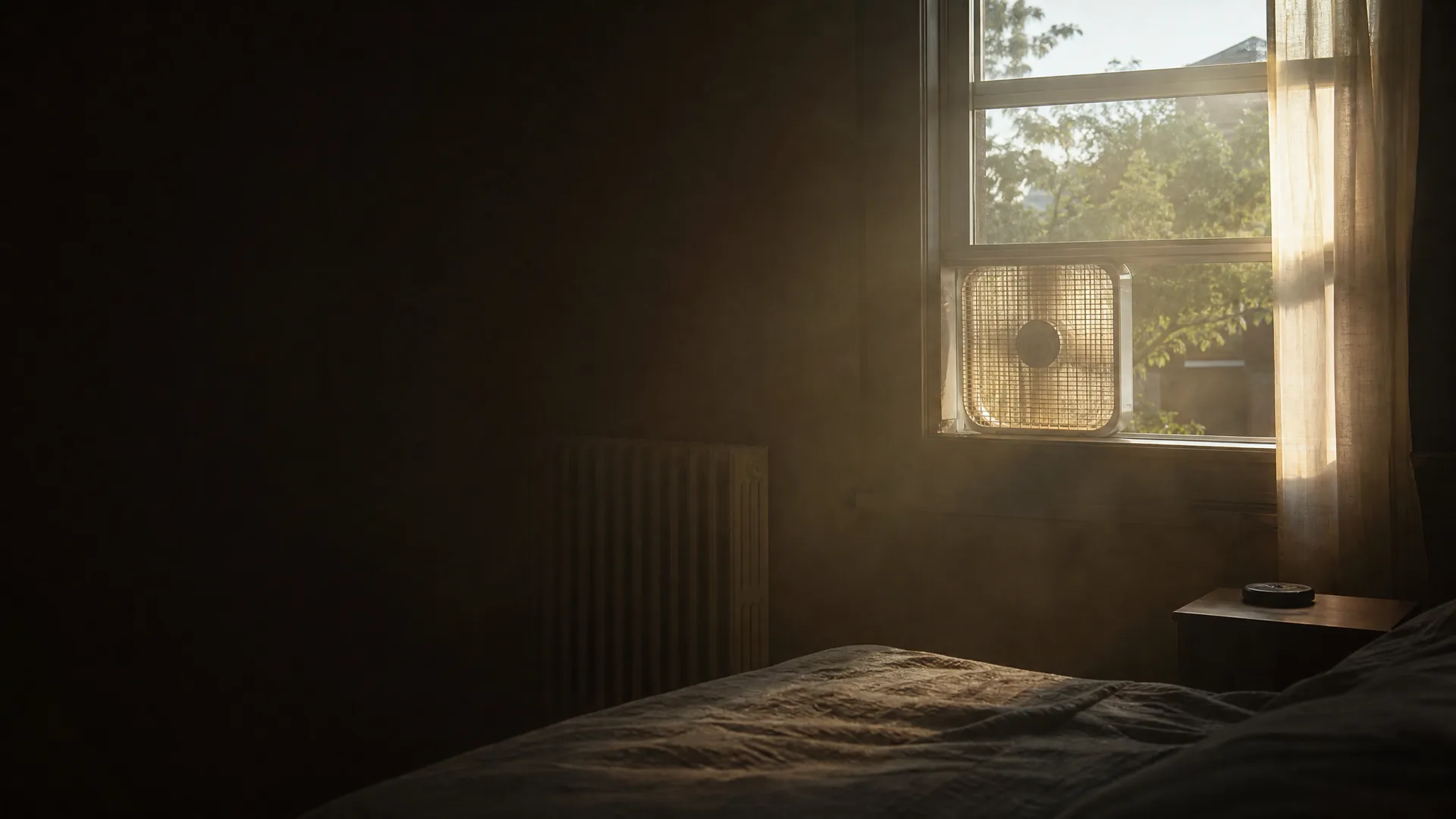
A dim bedroom with a bed in the foreground, a radiator against the wall, and a box fan set in a sunlit window with sheer curtains and green trees outside.

The box fan in the window is just moving the same hot air around. It's past nine and still close to ninety up here. You're lying on top of the sheets with the lamp off, listening to the compressor outside cycle on, run a while, then kick off again too soon. The vent over the bed is barely pushing anything. Downstairs the thermostat says seventy-four. Up here it doesn't feel like it. You've opened the window anyway, hoping for a breeze off the yard, but a June night in Saline County doesn't give you one. Tomorrow's supposed to be hotter.

A woman stands in the open doorway of a white stucco house holding the dark door, facing a man in a black cap and shirt seen from behind in the blurred foreground, with a potted flowering plant beside the entry.

What happens when the compressor can't keep up

A compressor that's wearing out doesn't fail all at once. It starts short cycling, meaning it kicks on, runs for a few minutes, then shuts off before the house has actually cooled, then starts again. Each start draws a hard pull of current, more than running steady would. Do that enough times in a July and August in Saline County and you're asking a tired compressor to do the hardest starts of its life on the hottest days it'll ever see.

A contractor checking a unit like this will test the capacitor and the run windings before saying the compressor itself is the problem, because a bad capacitor can cause the same short cycling and it's a much cheaper fix. That's worth knowing before you assume the worst. If you want a straight answer on which one you've got, the kind of contractor who works on these year-round can tell you from a service call, and you'd be matched with someone who already knows what a Saline County summer does to a system like yours.

A gray upholstered sofa with a beige cushion and knit blanket beside a curtained window, with a white mug and a book on a dark wooden table in the foreground and a lit lamp in the background.
A single-story brick ranch house with white-framed windows behind a large empty asphalt parking lot, surrounded by leafy green trees under a bright hazy sky with sun flare.

A Saline County summer holds a dew point around 68°F from June through August, according to NOAA data. That's the sticky kind of air that makes 88 degrees feel heavier than it sounds. Your AC isn't just dropping the temperature on a day like that. It's pulling moisture out of the air before the house feels any cooler at all, and that's the harder half of the job. A unit that's lost some capacity will still bring the thermostat down to 72, but the air coming out feels damp instead of dry, and surfaces in the house stay faintly sticky even with the system running. That's a sign the coil isn't pulling the moisture it used to.

NASA POWER T2MDEW

A gray outdoor air conditioning condenser unit on a concrete pad beside a house with horizontal gray siding, with a wall-mounted electrical disconnect box and insulated refrigerant lines, and blue hydrangeas in a mulched bed to the left.
This unit sits clean on its pad, lines running straight into the wall, nothing rusted and nothing leaking onto the concrete.
A gray outdoor air conditioner condenser unit on a concrete pad beside a house with beige horizontal siding, with an electrical disconnect box and insulated refrigerant lines on the wall and dry leaves on the ground.
This one's coated in dirt, the shroud's gone to rust, and conduit shows its age right along with the fins.

Cooling runs May through September

Five months of the year, your AC is the only thing standing between you and a Saline County summer. That's a long stretch to ask a weak unit to cover, and it's why age catches up with a system here faster than in places that only need it for a few weeks at a time.

NOAA nClimDiv 1991-2020

The signs don't need to all show up at once. An AC that's short cycling, running up the power bill, and asking for repairs more often than it used to is an AC that's telling you something plain: it's done, or close to it. One of those signs on its own might wait a season. All three together, in a Benton summer that still has months to run, usually don't. A unit that's holding up fine doesn't need any of this. One that's failing will keep costing you in July and August no matter how many times it gets patched. Once you've got a sense of where your unit stands, the next step is just getting someone out to look at it and give you a straight answer on what it needs. You don't have to track down who that is or figure out who's reliable. Send the request, and that part is off your plate.

An outdoor air conditioner condenser unit sits on a concrete pad beside a dark horizontal-lap-sided house, with mulch, grass, and shrubs around it.

Find an air conditioner installation pro in Saline County

One request ends the search for an air conditioner installer.

Step 1 of 3: Equipment