

Clean and clear
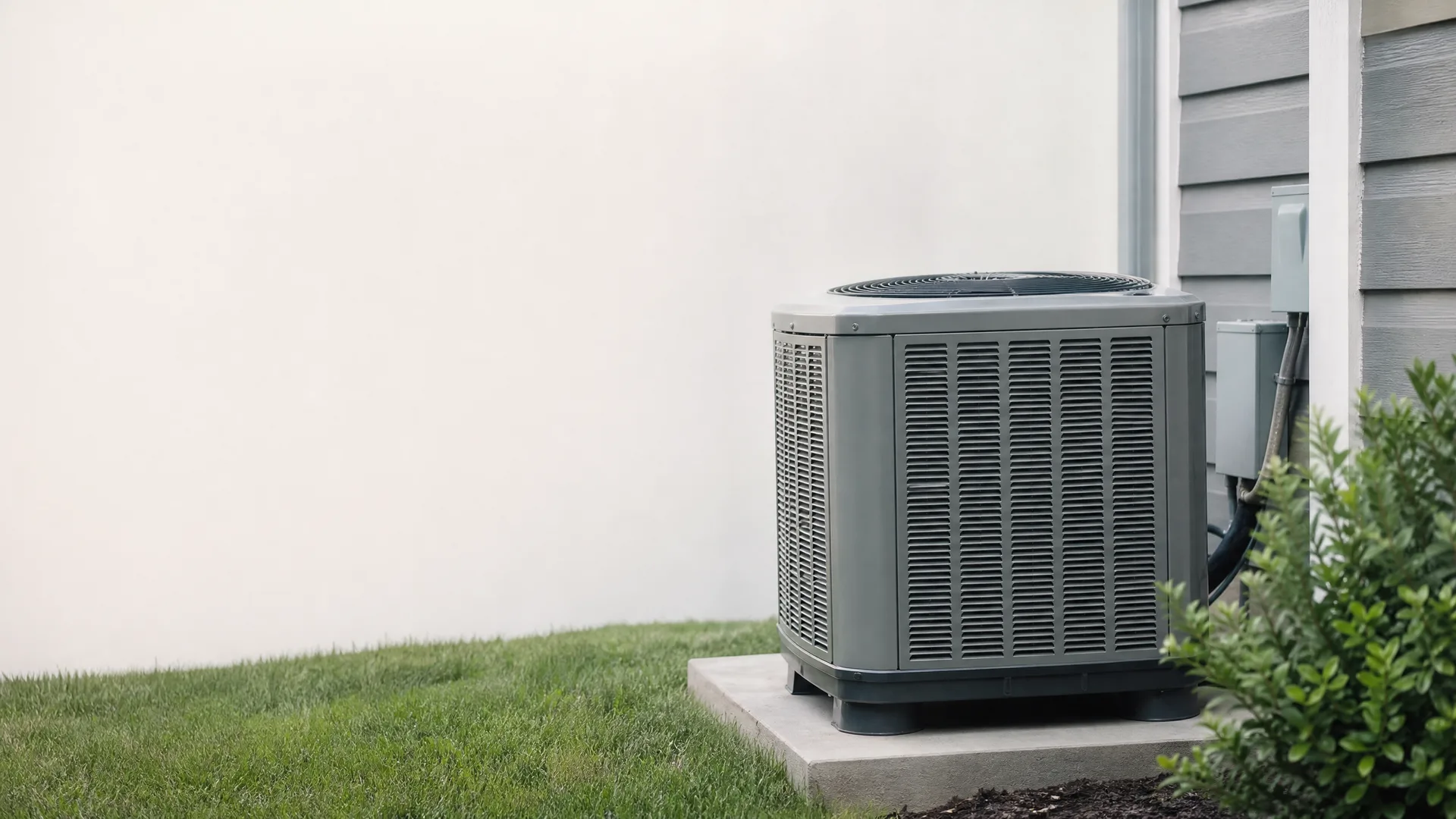
The coil is free of dirt, the fins are straight, and there's open air on all sides. The condenser can pull air through and push heat out without fighting to do it. That's what a unit checked before the heat sets in looks like.
Once you send the form, finding a pro is off your list.
Let a pro reach outGetting your AC ready for an Arkansas summer means having it serviced before the heat sets in, usually sometime in March or April. A technician checks the refrigerant charge, cleans the condenser coil, and tests the capacitor and fan motor, the parts that fail most once a unit is working hard day after day. Summers here ask a lot of this system. It runs for months straight against heat and heavy humidity, and a unit that was fine in October can struggle once it has to run that hard. A coil caked with a winter's worth of dust won't shed heat the way it should, and a capacitor already weak will often give out in the first real heat wave rather than waiting. Having the system checked before that stretch begins catches the weak part while it is still an easy fix instead of a breakdown on the hottest day of the year.

The coil is free of dirt, the fins are straight, and there's open air on all sides. The condenser can pull air through and push heat out without fighting to do it. That's what a unit checked before the heat sets in looks like.

Dirt and debris cake the grille and fins, so the coil can't shed heat the way it needs to. The compressor runs longer and harder for the same cool air, and in July and August that strain catches up with it.
You want to know what you're paying for when someone comes out to service your AC before summer. It's a fair question. A tune-up can mean a lot of things, and if you don't know what's supposed to happen, you can't tell a thorough visit from a quick one.
A technician starts outside at the condenser. They check the refrigerant charge against what the system calls for, since low refrigerant makes the compressor work harder and cool less. They clean the coil and straighten any bent fins so air moves through it the way it's supposed to. Then they test the capacitor, which gives the compressor and fan motor the jolt they need to start, and the contactor, which switches power to the unit. Inside, they check the blower motor and look at static pressure in the ducts. They'll also check the condensate drain, since a clogged one backs up and shuts the system down on its own. Each of these is a part that's known to fail by August if it's already weak in April.
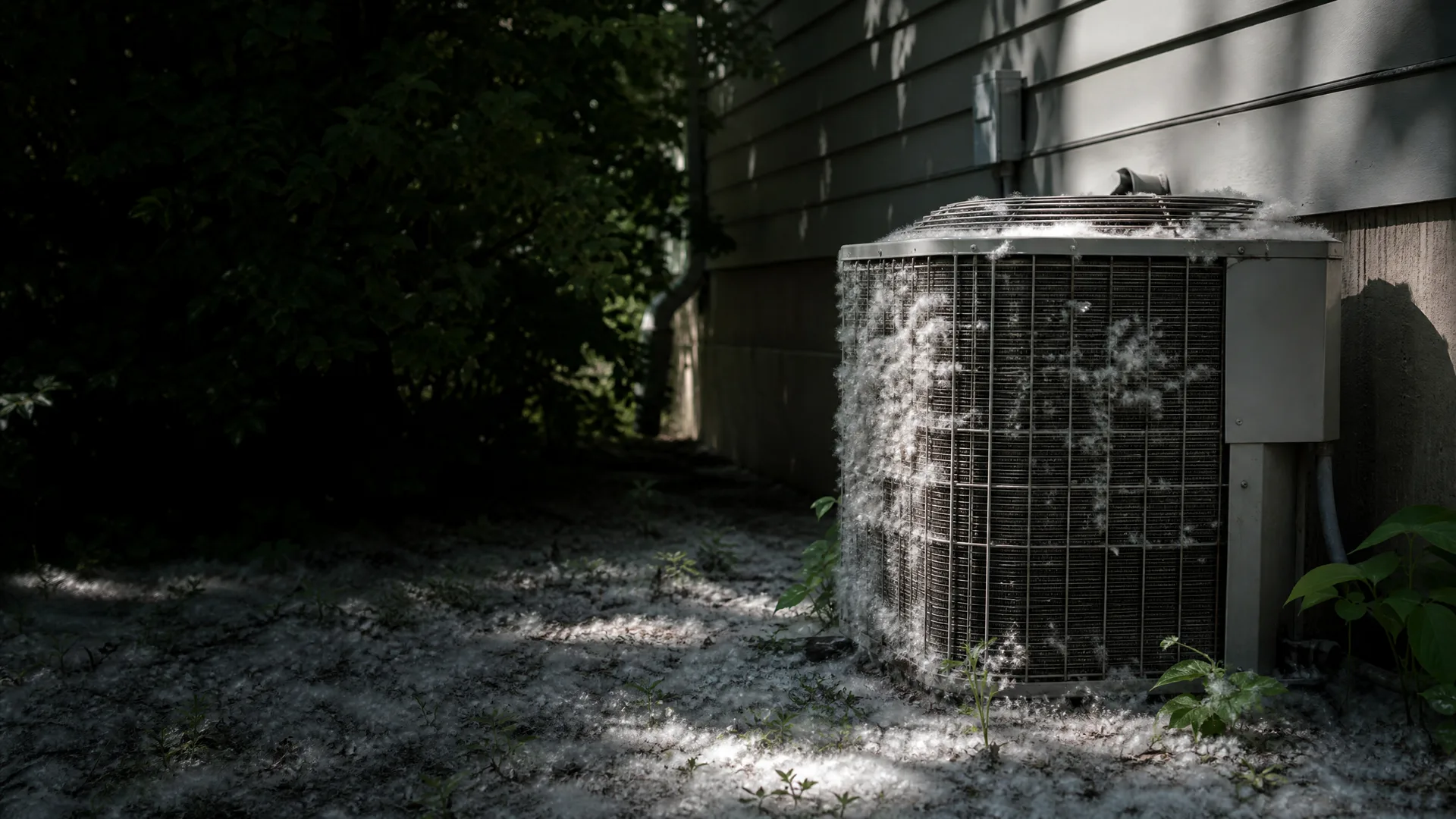
You're out pulling weeds along the side yard in May when you notice it, the condenser half buried in white fluff. The cottonwood tree two yards over has been shedding for a week, and the stuff has caught in the fins like snow that won't melt. You run a hand across the coil and it's matted thick, barely any metal showing through. The unit's still running, you can hear it, but it sounds like it's working harder than it should for a day that isn't even that hot yet. You think about July, about what this same coil looks like in another month if nobody's cleaned it before then.
By the time you notice your AC is struggling, it's already July and everyone else in Arkansas with a cottonwood tree or a unit that sat untouched since October is calling around too. A tune-up now, before the first real heat, gets ahead of that. Send the request and a licensed contractor near you picks it up, someone who services these units all summer and knows which ones come in with a weak capacitor or a coil packed with fluff before the homeowner even notices. You're not left sorting through a handful of companies trying to figure out who to trust. One contractor gets your request, the one who already knows this equipment and this climate, and from there it's off your plate. You found the problem walking past the condenser. Handing it off now, before the heat really sets in, is what keeps it from becoming a July afternoon with no cold air and a waiting list.

Your AC doesn't use up refrigerant the way a car uses gas. It runs on a sealed charge that's supposed to stay put for the life of the unit. If the level is low, it's because something is leaking, and the system has to run longer to pull the same heat out of the house. A low charge also lets the compressor run hotter than it's built for, and that's the most expensive part to replace.
The capacitor gives the compressor and fan motor the jolt they need to start spinning. It's a small part, and it's usually the first thing to go. Arkansas heat is hard on it, because the warmer the air around the unit, the faster a capacitor weakens. A technician can test it with a meter and see the number dropping before it fails outright, which is the difference between a part swapped in spring and a dead AC in July.
Arkansas power runs 12.87 cents a kilowatt-hour, cheap next to most of the country. That's the one break you get in a muggy summer. It still adds up fast if the coil is dirty or the charge is low and the unit has to run longer to cool the same house.
EIA-861 2025 statewide residential average
Getting your AC ready for summer in Arkansas comes down to one thing: having it looked at before the heat sets in, not after. A technician who services these units every spring knows what tends to go first, a weak capacitor, a coil packed with cottonwood fluff, a charge that's crept low from a slow leak. Catching any of that in March or April costs a lot less than finding out the hard way in July, when the unit's already struggling and so is everyone else's. A clean coil and a full charge mean the system cools your house on the first try instead of running twice as long to get there. That matters here more than most places think, since Arkansas power is cheap, under 13 cents a kilowatt-hour, but cheap power still adds up when a strained unit runs all day to make up for dirt it shouldn't have to fight through. None of this is complicated. It's a yard that gets checked instead of ignored since October, a coil that stays clear, a unit that doesn't have to work past what it was built for. The part you control is the timing. Get someone out before the first real heat wave, while there's still room on the schedule and the problem is still small enough to be a quick fix instead of a breakdown. One local contractor, the right one, is what makes that straightforward.




Send one request and you're done looking
The pro who reaches out is licensed in Arkansas.
