15 years of summers
That's roughly how many muggy Conway summers a well-maintained unit sees before a major part gives out. Past that point, repairs get harder to justify against the cost of a new system.
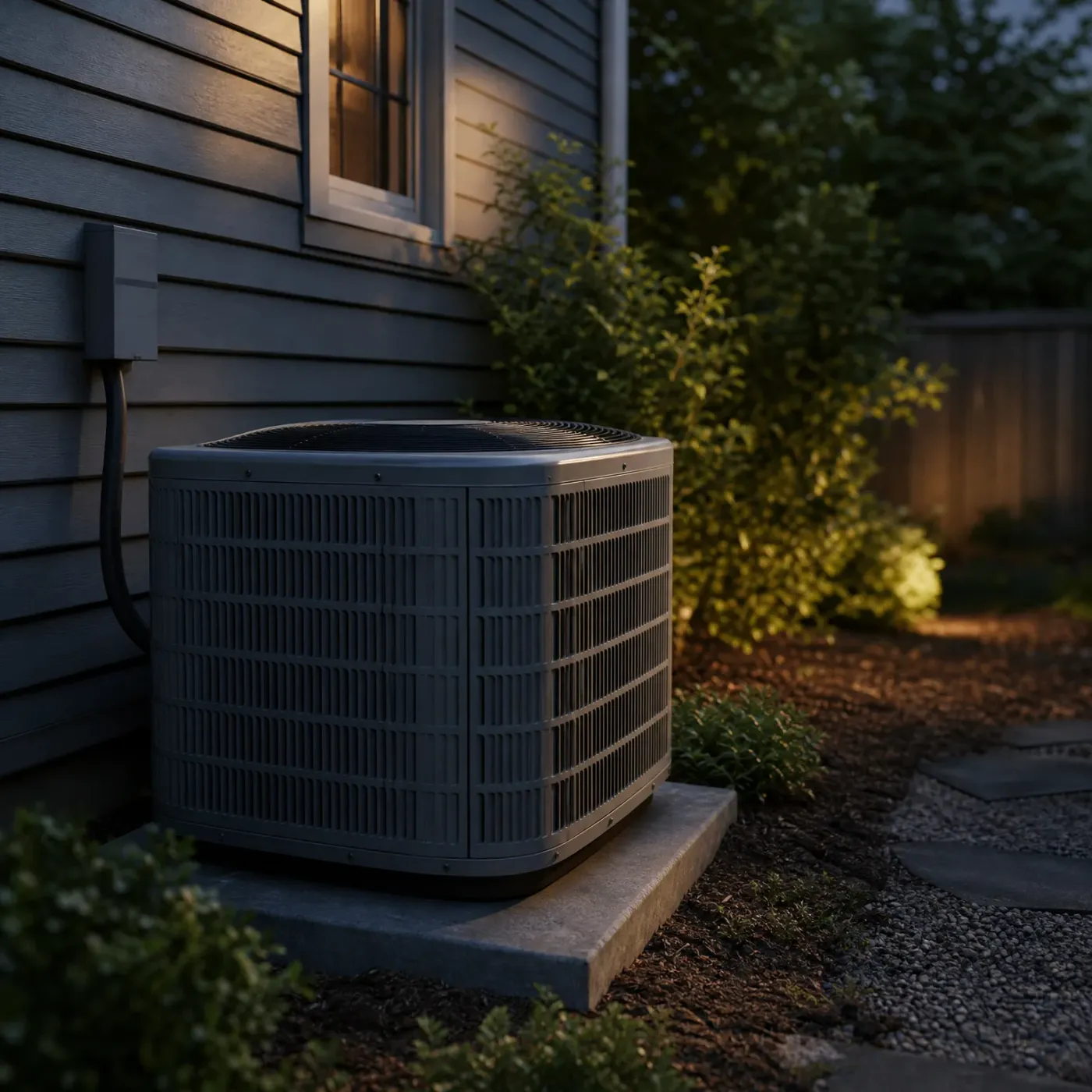
Stop chasing an air conditioner pro
Most AC units run 12 to 15 years in Conway before something major gives out, though a system working hard against a long muggy summer can wear faster than that. Below, what actually shortens that span and the signs your unit is near the end. If yours is on its way out, send the form once and skip the search for who can replace it.
Hand off the searchMost AC units in Conway last 12 to 15 years. A system that runs from April into October, year after year, puts in more hours than one in a drier, cooler climate, and that steady workload wears down the compressor and the fan motor faster than a mild summer would. The muggy air itself adds strain, since the system has to pull more moisture out along with the heat, which keeps it running longer per cycle. By year 12 or so, the parts that have been working hardest start to show it: the compressor weakens, refrigerant leaks start showing up, and repairs come more often and cost more each time. None of that means the unit quits on a set schedule. Some last longer with steady upkeep, and some fail sooner if a repair gets put off. What matters at this point is whether what you're looking at is a repair worth making or a sign the unit is finishing out its run.




That's roughly how many muggy Conway summers a well-maintained unit sees before a major part gives out. Past that point, repairs get harder to justify against the cost of a new system.
Weak cooling, rising bills, and repairs that keep coming back are signs the unit is wearing out. A contractor can tell you whether to repair it again or replace it.
If your unit is up there in years, you've probably noticed it running longer to hit the temperature you set, or not quite getting there on the hottest afternoons. Rooms that used to cool evenly now feel uneven, one warmer than the next. You might hear a rattle or a grinding sound from the outdoor unit that wasn't there before, or notice the air coming out of the vents feels weaker than it used to. Your bill has crept up even though you haven't changed how you use it. None of this means tonight is an emergency, but an AC that's straining tends to keep straining, and a compressor pushed hard all summer can fail without much warning.
A dew point is what makes Conway air feel heavier than the temperature alone suggests, and in Faulkner County it averages 68°F across June, July and August, according to NOAA climate data. At that level, your AC isn't just cooling the air, it's wringing a lot of moisture out of it too, and that moisture removal is what taxes the compressor on top of the heat. A unit already past the middle of its 12 to 15 year run feels this first: longer cycles, a house that feels damp even when the thermostat says it hit the set temperature. If that's what you're noticing this summer, sending one form beats spending your evenings calling around Conway for quotes and explaining the same problem three different times.
NASA POWER T2MDEW
By the time your AC is showing its age, a Conway summer doesn't give you much room to wait it out. A unit struggling at 15 years with a dew point sitting near 68 most of the summer isn't going to get easier on its own, and another season of running hard against that humidity is more strain on a system that's already behind. Finding someone to look at it the normal way means calling around, explaining what the unit's been doing to two or three different companies, and waiting on quotes to compare before you've even got someone scheduled. Sending this request means one contractor who installs these systems gets your information and reaches out, and that part of it is off your plate. You're left with the actual decision, replace it or not, once you know what you're working with, instead of spending the next week just trying to find who to ask.
Twelve to fifteen years is the honest range for a unit in Conway, and a summer that runs from April to October with a dew point near 68 is exactly what shortens it. The compressor and fan motor carry that load every year, and eventually one of them gives out for good instead of bouncing back from a repair. If your system is showing weak cooling, climbing bills or noises it didn't used to make, that's not bad luck. That's a unit telling you where it stands in its own lifespan. None of this means you need a new system today. It means you have enough information now to make that call on your own terms, before a July afternoon makes it for you. The alternative is waiting until the unit quits outright, then scrambling: searching for a contractor, calling a few, explaining the same problem to each one, and trying to judge quotes you have no real way to compare. That's hours most people don't have in the middle of a Conway summer. Sending one form instead means a licensed installer who already knows what Conway summers do to a system gets the details, and the work of finding someone stops being something you have to do yourself. Whether your unit has a few years left or none, knowing where it stands beats guessing, and that is all the facts above add up to.

Let someone else find the pro



