Fill out one form instead of calling around for an air conditioner tune-up.
On a hot Arkansas day, your AC should run long stretches, sometimes close to the whole afternoon, and that's normal. What isn't normal is when it never shuts off at all, or shuts off and on every few minutes. Those are two different problems, and they point to different things going wrong.
A system that runs almost nonstop in July heat isn't necessarily broken. The muggy air here makes your unit work harder to pull moisture out, not just cool the air, so long run times are part of the deal. But if it's running all day and the house still isn't cool, or your electric bill jumped well beyond what the heat alone explains, something inside it has worn down.
Figuring out which is which usually means getting a contractor out to look at the actual equipment. That's normally where the trouble starts. You search around, call a few places, explain the same thing about your system to each one, then wait on quotes and try to compare them against each other without really knowing what you're comparing.
This page skips that part. It connects you with one licensed contractor near you, someone who works on AC systems in Arkansas all summer and has a good sense of what tends to fail first in this kind of heat and humidity. No explaining your situation five times. No stack of quotes to sort through.
Below, you'll find what a normal run time looks like on a hot day here, what signs mean the system is struggling instead of just working hard, and what maintenance can do to keep it from turning into a bigger repair.
On a hot Arkansas day, your AC can easily run for forty minutes to an hour at a stretch, cycling on and off through the afternoon rather than shutting off completely. When the air outside is near 95 and heavy with humidity, the unit has to keep pulling heat out of the house and moisture out of the air, and that takes time. A properly sized system isn't built to blast the house cold and shut off. It's built to run long and steady, holding the temperature where you set it. If yours is doing that and the house still feels right, it's working the way it should. What matters more than the runtime itself is whether the house actually cools down and the air coming out of the vents feels cold. If the unit runs all afternoon and the house still feels warm, something is making it work harder than it needs to, and that's worth having a local contractor look at before the hottest part of summer is still ahead.
The thermostat is the switch for all of it. Set it at 72 and the system runs until the air in the house reads 72, not a minute less or more. The compressor outside and the fan inside start together and stop together, as one unit, every time. On a 95 degree Arkansas afternoon with the air heavy and wet, that compressor has two jobs instead of one. It has to lower the temperature and wring the moisture out of the air at the same time, and that second job is what stretches a cycle from twenty minutes to forty or longer. None of that means something is wrong. A central AC is built around the worst days of the year, so a long run time on a hot afternoon is the system doing what it was sized to do. The trouble shows up in the pattern, not the length. A unit shutting off every few minutes is a different problem than one running long, and a unit that never shuts off at all is pointing at something else entirely, usually in the refrigerant or the coil.
Why Long Cycles Are Normal
A thermostat set at 72 calls for cooling until the indoor air actually reaches 72, so the length of the cycle depends on how far the indoor temperature has to drop and how fast heat is entering the house.
The compressor and the indoor fan run together as one cycle, and both shut off at the same moment once the thermostat is satisfied.
A central AC is sized to cool the house on the hottest days of the year, not to keep up with ease, so long run times on a 95 degree afternoon mean it's working exactly as designed.
Humidity makes the compressor work through two jobs at once, pulling moisture out of the air as well as lowering its temperature, which stretches out every cycle.
Short cycling, where the unit shuts off within a few minutes of starting, points to a different problem than a unit that runs long but still shuts off, such as a dirty filter restricting airflow or a thermostat reading the room wrong.
A unit that never shuts off at all on a hot day usually means the system can't move enough heat out of the house, often tied to low refrigerant charge or a coil that isn't releasing heat properly.
One form, no calling around
A licensed local pro takes the request for your air conditioner tune-up.
Skip calling around to set up an air conditioner tune-up.
It costs nothing to send, and you don't have to hire anyone.
Long Cycle or Something Wrong
Normal long cycle
The unit runs most of the afternoon but still shuts off for stretches, even if those stretches are short.
Air coming out of the vents stays cold the whole time it's running, not lukewarm toward the end of a cycle.
The house holds close to the temperature you set once it gets there, even if it takes a while to arrive.
Outside the hottest hours, the system cycles off more, which tells you it's keeping up when the load is lighter.
A contractor who services this equipment every summer in Arkansas expects this pattern and won't treat it as a problem on a maintenance visit.
Running nonstop
The unit never shuts off, even overnight or in the early morning when it's cooler outside.
The house temperature keeps drifting up from what the thermostat is set to, no matter how long it runs.
Air from the vents feels warm or only slightly cool instead of cold.
Ice shows up on the outdoor unit or the indoor coil, which shouldn't happen while the system is actively cooling.
A local contractor who knows this equipment can usually point to a few likely causes, like a low refrigerant charge or a coil that's lost its airflow, before even opening the cabinet.
Running long but keeping up
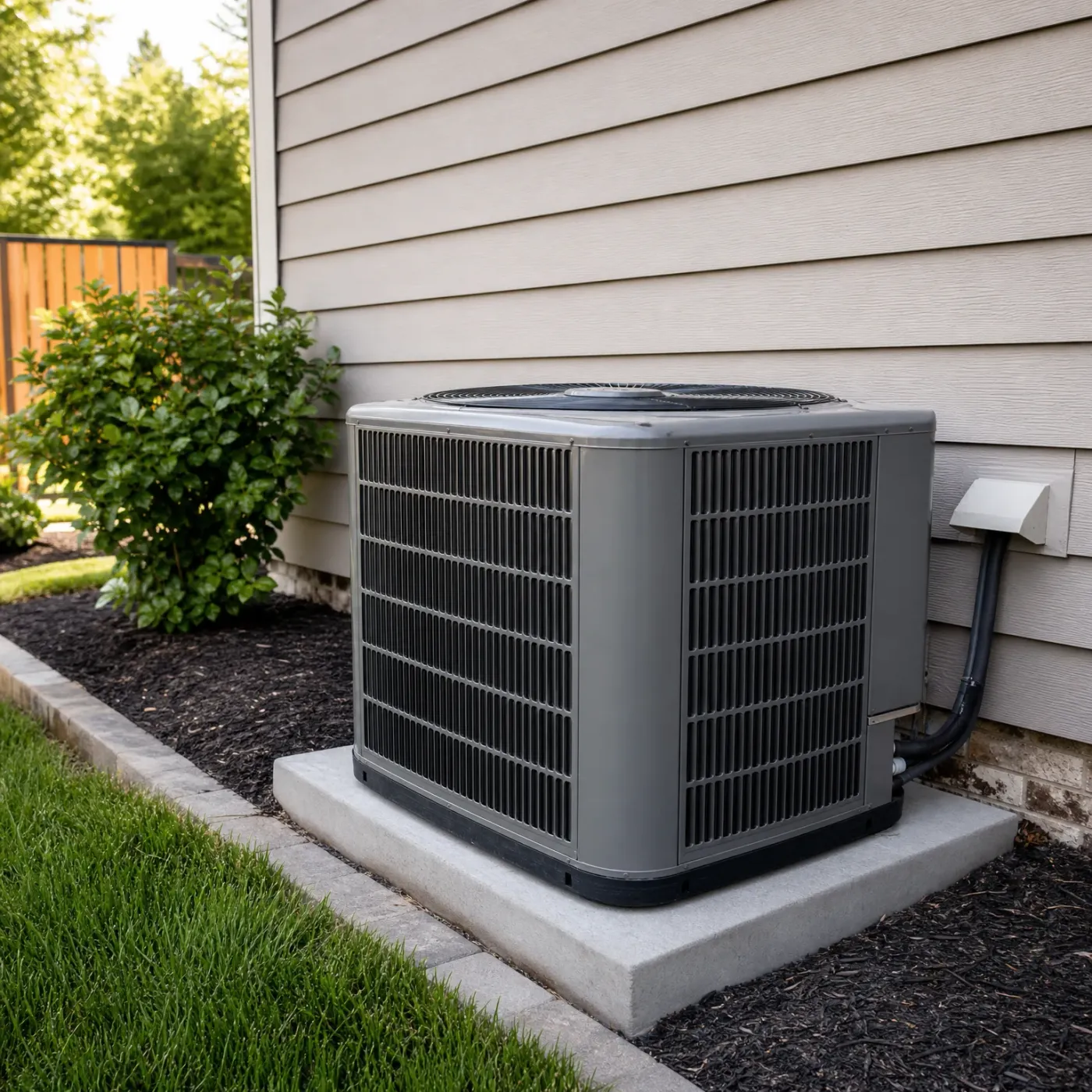
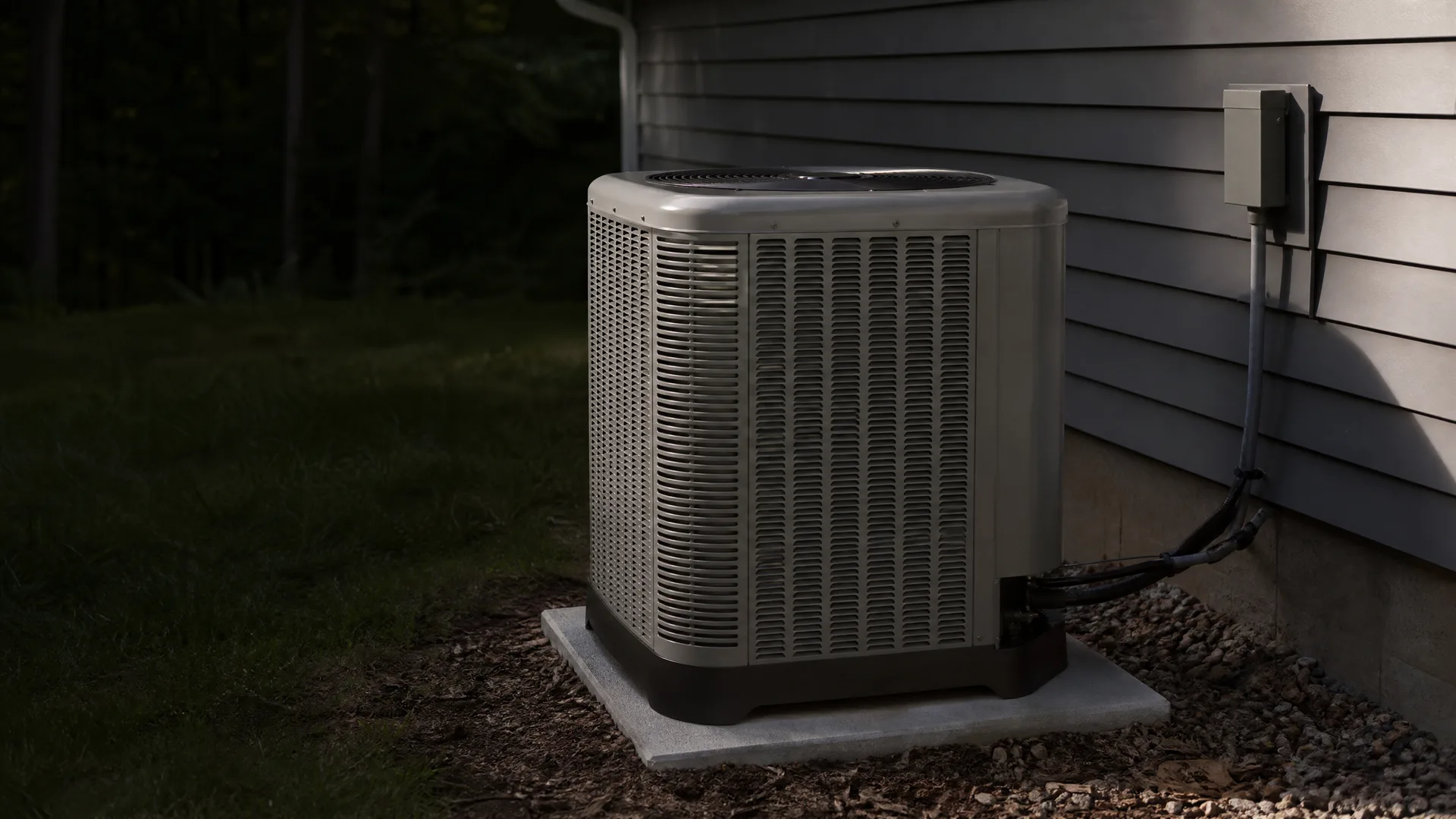
This is what a unit doing its job on a 95 degree day looks like. It sits on the pad, lines and conduit running up to the disconnect, working through long cycles without strain. Clean coils and a clear path around it help it move that much heat for hours at a time.
Running long and losing ground
That grille is caked with dirt and weathered down, and pine mulch sits right against the cabinet. A coil that dirty can't shed heat the way it should, so the unit runs the same long stretches but struggles to pull the house down to temperature. A tech who services units all over Arkansas can tell from the grille alone whether a cleaning will fix it or something inside has already given out.
Is your house just not cooling down anymore?
You set the thermostat to 72 and it says 76, and it stays at 76 no matter how long the unit runs. The air at the vents feels weak instead of cold. Rooms farthest from the unit stay warm while the one with the thermostat finally cools. You notice the outdoor unit running when you leave for work and still running when you get home. Your power bill has climbed past what you paid last summer for the same kind of weather. None of this means the unit is broken yet, but a system working this hard for this little result is usually losing capacity, and left alone through a full Arkansas summer, that strain is what leads to a compressor failing outright.
A big part of what your AC is fighting on a summer afternoon isn't the 95 on the thermometer. It's the moisture riding along with it. Averaged across Arkansas summers, the dew point sits at 68°F (NOAA), which is heavy enough that the air feels thick even in the shade. Your AC has to pull that moisture out before the house feels cool, not just drop the temperature, and that's extra work the unit does on top of cooling the air itself. It's part of why a cycle runs forty minutes instead of ten, and why the house can still feel a little damp even after the thermostat says it's reached 72.
NASA POWER T2MDEW county cells weighted by homes
Before you get your air conditioner maintenanceAfter you get your air conditioner maintenance
Power costs 12.87 cents per kilowatt-hour statewide
At 12.87 cents a kilowatt-hour, those long afternoon cycles add up fastest when the unit is working harder than it should, low on refrigerant or pulling air through a dirty coil. A unit that's maintained reaches 72 and shuts off instead of running the whole bill up for nothing.
EIA-861 2025 statewide residential average
A unit that's kept up
Coils get rinsed off, the filter gets changed, refrigerant gets checked against what the unit calls for. A contractor who works on these systems all summer knows which parts fail first in this heat, and catches a weak capacitor or a low charge before it turns into a unit that runs all afternoon without ever reaching 72. That's the difference maintenance makes on a day like this.
A unit left alone
Dust builds up on the coil, the filter clogs, refrigerant drops a little every year without anyone noticing. None of that stops the unit from running. It just makes it work harder to do the same job, pulling longer on a 95 degree afternoon and still landing short of 72. Skip a few summers of upkeep and the long cycle you're watching today is the unit falling further behind.
Long cycles are normal. A unit that can't keep up isn't.
A long cycle on a 95 degree afternoon just means your AC is doing what it's built to do. What matters is whether the house actually gets to 72 and the unit shuts off for a while, or whether it runs straight through without ever catching up. One is a hot day. The other is a unit losing the fight, and it won't win that fight on its own.
If you've gotten this far wondering which one you're looking at, you already have a reason to get it checked rather than wait it out through August. A local contractor who services these units all summer can look at the coil, the refrigerant charge, the airflow, and tell you in one visit whether what you're seeing is normal strain or a sign something's failing. That's one call instead of several, one visit instead of sorting through quotes from companies that don't know your system yet.