

Do you need a dehumidifier with AC in Arkansas
Send the form and the search for an installer is over.
Let a pro reach outDo I need a dehumidifier with my AC in Arkansas?
Your AC runs most of the summer here and the house still feels sticky even when the thermostat says it's cool enough. You're wondering if the unit should be doing more, or if something extra needs to be added to actually clear the air out.
Not usually, if your AC is sized and running right
A properly sized central air conditioner pulls a lot of moisture out of the air on its own as it cools, which is most of what makes a muggy Arkansas summer bearable indoors. If the house still feels damp with the AC running, that's often a sign the system is oversized and cooling the air faster than it can wring the moisture out, or it's not running long enough to do the job. A whole-home dehumidifier can help in spots a central system can't reach well, like a basement or a closed-up room, but it's not something every house here needs. Get the AC sized and set up correctly first. That alone fixes most of the stickiness.

Why the thermostat can lie
Your thermostat reads air temperature, not moisture. An AC set to 72 can hit that number and shut off before it has pulled enough water out of the air to feel dry. In Arkansas that gap shows up as a house that reads cool but still feels clammy, floors that stay tacky, towels that won't dry. A whole-home dehumidifier works alongside the AC rather than waiting on it, pulling moisture out even on milder days when the AC barely runs.

What short cycling leaves behind
When a room cools fast, the AC shuts off before it has run long enough to wring much humidity out of the air. This happens often in spring and fall here, when it's warm enough to trip the thermostat but not warm enough to keep the compressor running. A dehumidifier tied into the ductwork keeps working through those stretches, so the air inside doesn't stay damp just because the AC decided it was done.
AC Alone or AC with a Dehumidifier
AC Alone
- Your AC pulls moisture out of the air only while it's running, and a right-sized unit cools the house fast and then shuts off.
- On a mild, muggy day the thermostat can be satisfied before the air inside ever dries out.
- A system that short cycles because it's oversized for the house will struggle with humidity even if it keeps the temperature where you want it.
- Running the fan on auto instead of on helps, since a fan set to run constantly blows moisture back off the coil and into the house.
- Lowering the thermostat a degree or two can pull out more moisture, but it also runs up the power bill without fixing the real problem.
- If the house feels damp mainly in spring and fall, when the AC barely runs, the unit isn't the thing to blame.
AC Plus Dehumidifier
- A whole-home dehumidifier ties into the ductwork and runs on its own schedule, pulling moisture whether or not the AC is calling for cooling.
- It keeps the house dry during the shoulder months here, when it's warm enough to feel muggy but not warm enough to run the AC much.
- You can set the humidity target directly instead of guessing from how the house feels at a given thermostat setting.
- It takes load off the AC, since the AC no longer has to run longer than needed just to chase moisture out of the air.
- Installing one means a licensed contractor ties it into your existing ductwork, so it has to be sized and fitted to the system already in your house.
- A portable unit in one room helps that room, but it won't do much for a damp feeling spread through the rest of the house.




What's that clammy feeling in your own house telling you?
Walk through your house and check what your hands and nose already know. Bedsheets feel damp even though the AC ran all night. Wood floors feel tacky. A window near the kitchen fogs up while you're cooking. You open a closet on an exterior wall and catch a musty smell, or you spot a dark spot building in the corner of the bathroom ceiling. None of that means your AC is broken. It means the air sitting in your rooms is still holding more water than it should. Left alone through a full Arkansas summer, that moisture works on wood trim, drywall, and anything stored in a closet or garage, and it gives mold a place to start.

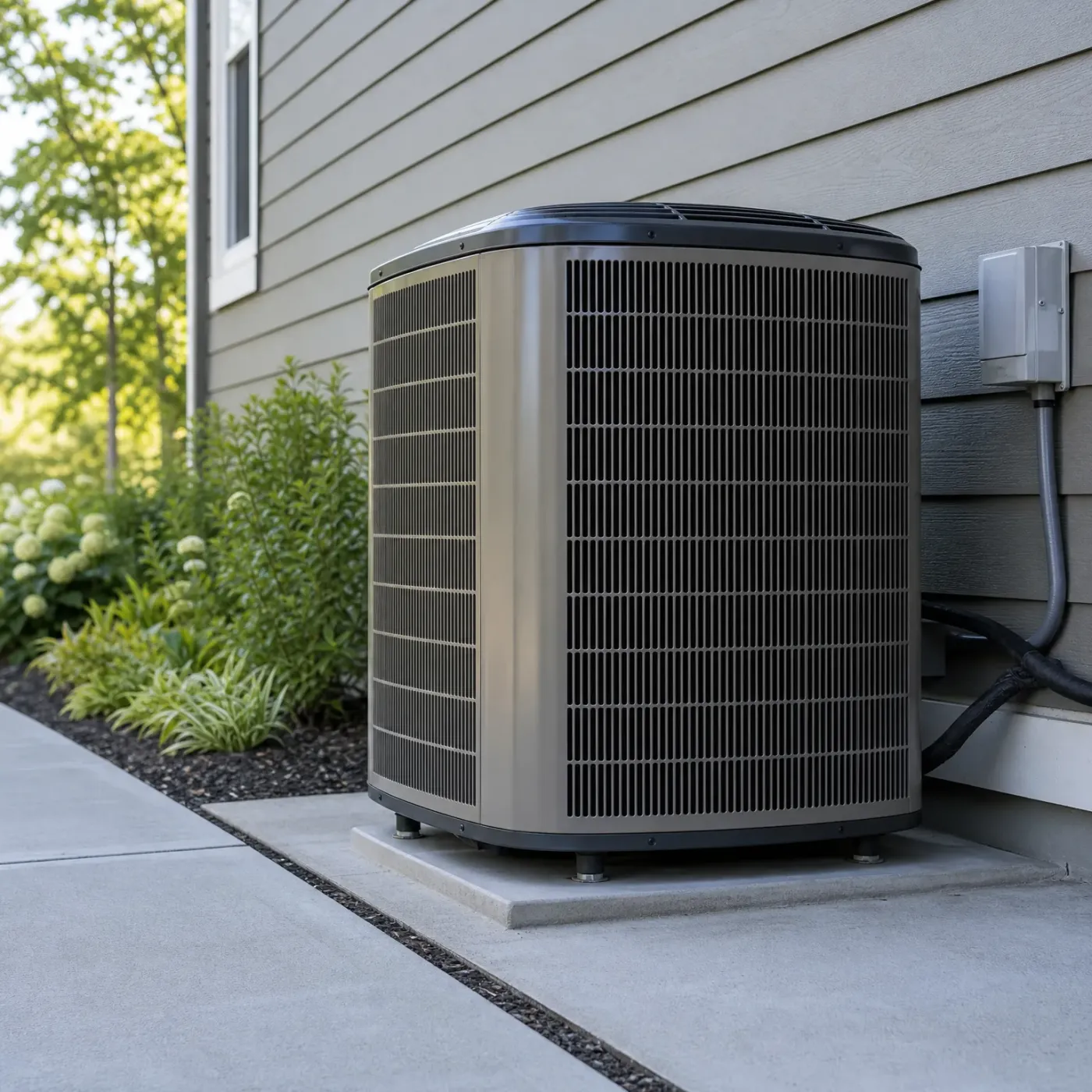
Humid air gets pulled into the dehumidifier through its intake
Air passes over a cold coil that pulls the water out of it
Collected water drains out through a hose, no bucket to empty
Drier air blows back into the room so the AC cycles less


Finding a pro stops being your job
One installer gets your project, so there's no bidding war over it.
One request and the search for a pro is handled.
There's no charge for the request.


A dew point averaged across Arkansas summers of 68°F, figured from where homes sit around the state, is the kind of muggy that sits on your skin the moment you step outside. Your AC has to work against that same air once it's inside the house. It can only wring out so much moisture per cycle, so on the stickiest stretches of June, July and August, the coil is fighting a wetter load than it sees the rest of the year. That's why the same thermostat setting feels less comfortable in August than it does in April, even though the number on the wall hasn't moved.
NASA POWER T2MDEW county cells weighted by homes


How a whole-home unit ties in
- A whole-home dehumidifier ties into your ductwork, so it pulls moisture from air moving through the whole system, not just one room.
- A control, often wired next to your thermostat, reads the humidity level and starts the unit on its own when it climbs past a set point.
- It shares the return duct with your AC, so the same blower that moves cooled air also carries air through the dehumidifier's coil.
- Wiring it into the air handler lets it work even on days your AC doesn't run long enough to pull much water out of the air.
- A condensate line routes the water it collects to the same drain your AC already uses, so nothing needs to be emptied by hand.
- Sizing it to your square footage, not just your AC's capacity, is what decides whether it actually keeps up with Arkansas humidity.
A whole-home dehumidifier doesn't sit in a corner like a portable one. It gets installed into your ductwork, usually near the air handler, so it works on the air your whole system is already moving. A control wired near the thermostat watches the humidity level and switches the unit on by itself once that number climbs too high, without you touching anything. Because it shares the return duct with your AC, the same blower pulling air across your cooling coil also pulls it through the dehumidifier. That matters on the days your AC cycles off fast because the house hit temperature before it hit dry. The dehumidifier keeps working those days anyway, since it isn't waiting on the thermostat the way your AC is. Water it pulls out of the air drains through a line tied into the same condensate drain your AC uses, so there's no tray to check or bucket to carry out. Getting the size right is its own piece of the job. A unit sized off your AC's tonnage instead of your square footage can end up undersized for a muggy Arkansas summer, running constantly and still not keeping up. That's a sizing call worth having a contractor walk through room by room rather than guessing at, since the duct connection and the control wiring both depend on getting it right the first time.
Power costs 12.87 cents per kilowatt-hour statewide
At under 13 cents a kilowatt-hour, running your AC longer to chase moisture out of the air costs less here than in most states. That gives you room to add a dehumidifier without the power bill changing much, since it's the AC's compressor, not the dehumidifier, that draws the bigger load.
EIA-861 2025 statewide residential average
So yes, most houses in Arkansas get real benefit from adding a dehumidifier alongside the AC, especially if the sticky feeling shows up even when the thermostat says the house is cool enough. The AC handles temperature well on its own. Moisture is a separate job, and a dehumidifier tied into your ductwork is what handles it without making the AC work harder than it needs to. Getting that installed right matters more than picking a brand name off a shelf. It has to be sized for your house and tied into your ductwork and thermostat correctly, and that's work for someone who installs this equipment in Arkansas homes every summer and knows how it should be wired and set up. A local, licensed contractor who does this regularly can look at your house and tell you what it actually needs. You'll hear from one contractor, not a handful of companies calling at once, which means one person who's looked at your situation and can speak to it directly rather than a pile of quotes to sort through on your own.

Let someone else find the pro
The pro who reaches out is licensed in Arkansas.