Tell us about the job
Takes about a minute. No obligation.
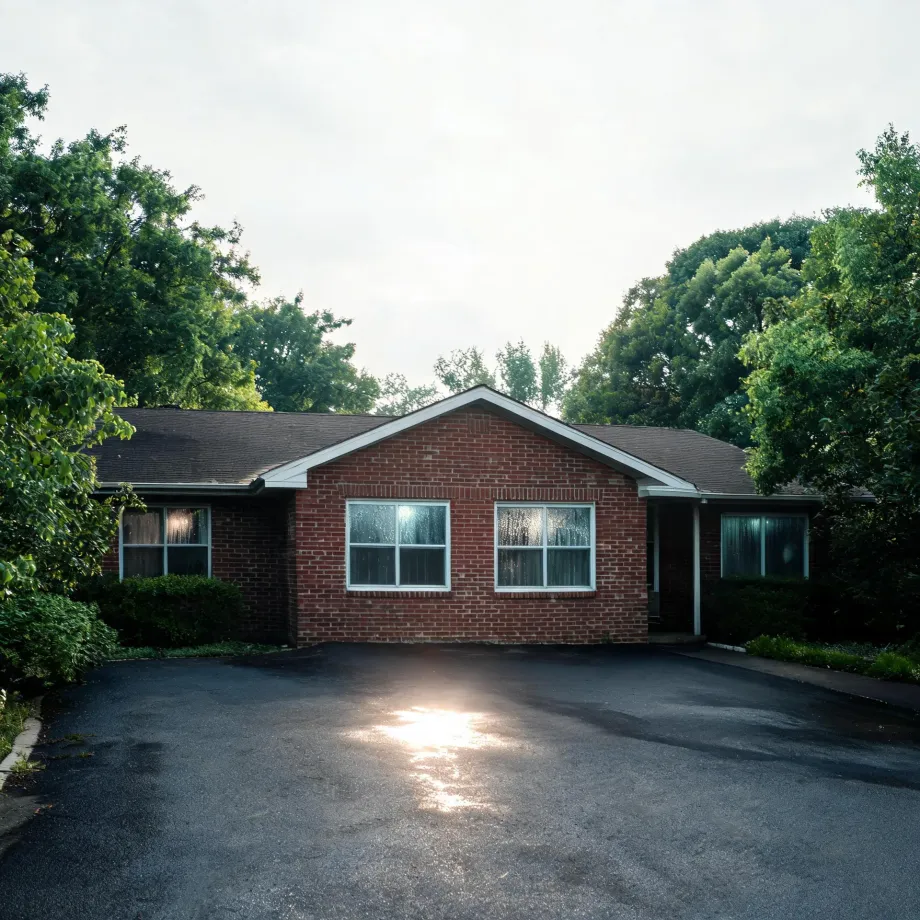
The compressor on a central AC unit starts and stops repeatedly across a long cooling season, and each cycle stresses the contactor, the capacitor, and the refrigerant seals. Homes in Arkansas County, AR run cooling about five months a year, from May through September. By the time a system shows symptoms, the contactor has likely switched the compressor on and off thousands of times since spring. A contractor diagnosing a repair here checks those components before anything else, because that is where the accumulated load lands first. Ductwork and air handlers matter too, but the outdoor unit is what the season punishes.
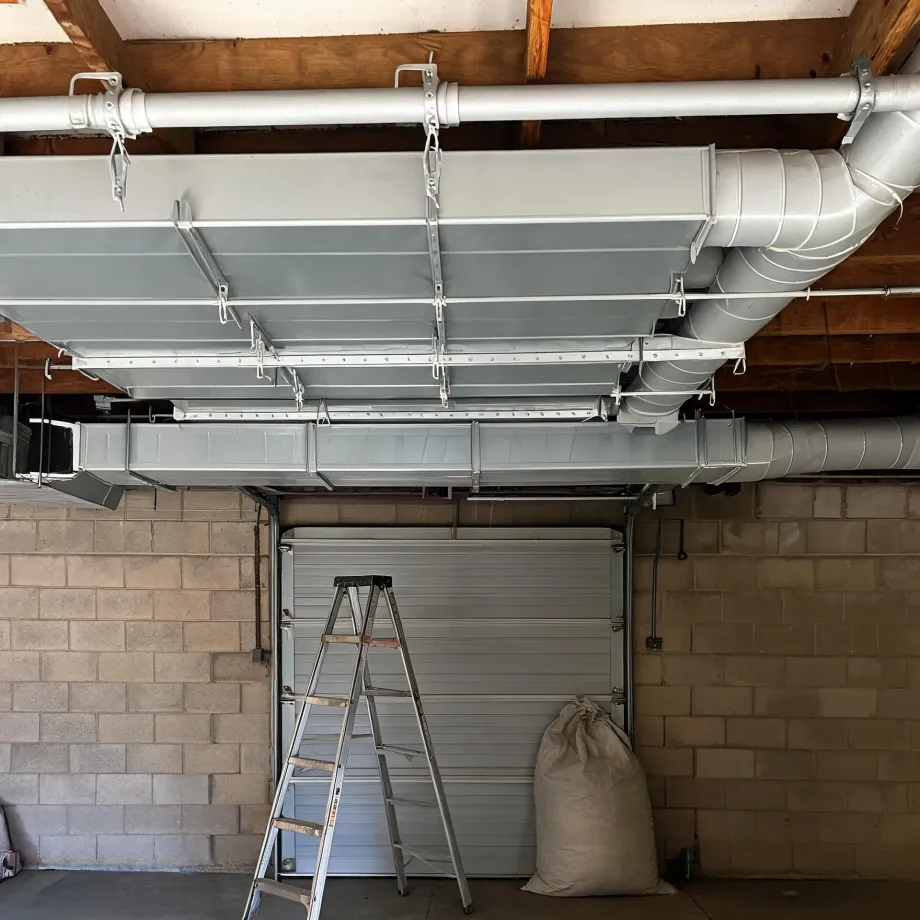
Ductwork in these houses has been carrying air long enough that what a contractor finds when they open the equipment is rarely a simple swap. Half the homes in Arkansas County, Arkansas were built in 1978 or earlier (2020-2024 ACS 5-year). That history shows up inside the unit: compressors that have cycled through many Arkansas summers, capacitors that are at or past their rated life, contactors worn down from years of high-demand cooling. Parts availability for systems this vintage varies by manufacturer, and a contractor has to confirm what can still be sourced before quoting a repair.
The Parts of a Central AC a Contractor Checks First
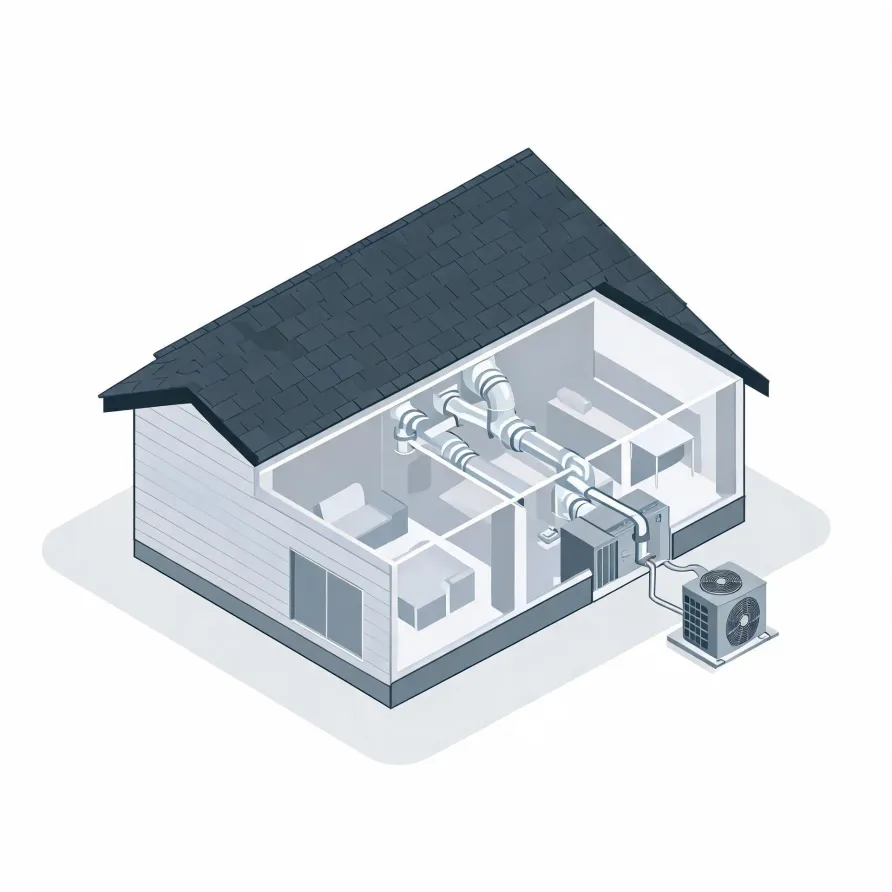
The outdoor condenser unit sits on a pad outside the house and holds the compressor and condenser coil, the two components a contractor reaches for first when a system stops cooling. The compressor drives the whole cycle, and a failed one is usually audible or simply dead on startup. The condenser coil sheds heat to the outside air, and a dirty or bent coil shows up as a system that runs constantly but never quite keeps up.
Inside the house, the air handler houses the evaporator coil and the blower. The evaporator coil pulls heat out of indoor air and is a common site for ice buildup or refrigerant problems, both of which a contractor can spot quickly. The blower moves conditioned air into the ducts, and a weak or failed blower motor explains poor airflow even when everything else tests out fine. The refrigerant lines connecting the two units also get checked for leaks at the fittings.
The drawing shows the general layout of a central AC system, and a licensed contractor determines which parts apply to the specific setup in your house.
Find a contractor in Arkansas CountyArkansas County by the Numbers
80 severe weather events were recorded in Arkansas County, Arkansas between 2015 and 2024.
NOAA National Centers for Environmental Information, Storm Events Database, bulk CSV export, events 2015-01-01 through 2024-12-31.Half the homes in Arkansas County, Arkansas were built in 1978 or earlier (2020-2024 ACS 5-year).
U.S. Census Bureau, 2020-2024 American Community Survey 5-Year EstimatesArkansas County, Arkansas holds 8,696 housing units (2020-2024 ACS 5-year).
U.S. Census Bureau, 2020-2024 American Community Survey 5-Year EstimatesOwners occupy 64.6% of the occupied homes in Arkansas County, Arkansas (2020-2024 ACS 5-year).
U.S. Census Bureau, 2020-2024 American Community Survey 5-Year EstimatesCodes & Standards Covering Central AC Repair in Arkansas County, Arkansas10 sourced rules and standards
What Happens When a Contractor Comes Out
Split-system central air conditioners rated below 45,000 Btu/h manufactured on or after January 1, 2023 must meet a federal minimum of 13.4 SEER2.
Split-system central air conditioners rated at or above 45,000 Btu/h manufactured on or after January 1, 2023 must meet a federal minimum of 13.4 SEER2.
Split-system central air conditioners manufactured between January 1, 2015 and December 31, 2022 had to meet 13 SEER, the metric that preceded SEER2.
Single-package central air conditioners manufactured on or after January 1, 2023 must meet a federal minimum of 13.4 SEER2.
Space-constrained central air conditioners manufactured on or after January 1, 2023 must meet a federal minimum of 11.7 SEER2.
Federal efficiency standards for split-system central air conditioners and heat pumps are set on each certified combination of outdoor unit and indoor coil rather than on the outdoor unit alone.
Residential and light commercial air conditioning and heat pump systems assembled in the field, including mini-splits and unitary systems, may not be installed on or after January 1, 2025 using a refrigerant with a global warming potential above 700.
A field-assembled system whose specified components were all manufactured or imported before January 1, 2025 carries no installation compliance date under the refrigerant restrictions and may still be installed.
Licensing Rules for HVAC Repair in Arkansas County, Arkansas
An Arkansas HVACR licence is good across the state: no city or county may require its own licence to do HVACR work, though local permits and inspections still apply.
Arkansas requires an HVACR licence or registration: it is unlawful to do HVACR work without the appropriate one unless the chapter exempts you.
Severe Weather Events in Arkansas County
Arkansas County's climate puts real stress on central AC systems, and that stress compounds over time. Repair needs here are shaped by local conditions, which is why weather history is part of understanding what this equipment goes through.
80 severe weather events, 2015–2024. Source: NOAA National Centers for Environmental Information, Storm Events Database.