

AC making a loud noise in Fayetteville, AR
A loud noise from your AC usually points to one of a few things. A rattling sound often means something loose, like a panel or a fan blade hitting its cage. A high-pitched squeal usually means the blower motor bearing is wearing out. Banging or clanking inside the outdoor unit can mean a loose or broken part on the compressor, which is a bigger problem. Clicking when the system starts or stops is normal, but repeated clicking without the system starting usually means a failing capacitor or relay. Given how hard your AC runs through a Fayetteville summer, these parts wear faster here than they would somewhere milder. A noise that just started and is getting worse usually means a part is failing, not fixed. Running the system while it grinds or bangs can turn a small repair into a bigger one, since a loose part left alone tends to damage whatever it hits next.

Tech listens to the noise and notes when it happens
Panels come off to expose the blower and the outdoor fan
Loose screws, bent fan blades or worn bearings get checked first
Blower wheel and motor mount get tested for play or wobble




The noise itself doesn't change your power bill. A banging unit pulls the same electricity as a quiet one, so there's no cost to waiting from the noise alone. The cost comes from what the noise turns into. A loose panel rattling against the cabinet will eventually work itself looser, and if a fan blade starts hitting something, it can bend and throw the fan off balance. A squeal from the blower motor bearing is the bearing wearing down, and that doesn't fix itself with time. It gets louder, then the motor works harder, then it fails. If the outdoor fan is close enough to hit its cage, running it that way can wear through the housing. Once that happens, the unit stops cooling. That's a different problem on a July afternoon in Fayetteville than it is in October. A house with no air conditioning on a 95 degree day heats up fast and stays hot, since there's nowhere for that heat to go once the system is down.
What that noise costs you
- A loud AC running all afternoon in a Fayetteville summer still pulls the same power whether it's quiet or banging.
- A rattle from a loose panel can turn into a bent fan blade if the unit keeps running that way.
- A squealing blower motor bearing tends to get worse over days, not better on its own.
- If the outdoor fan is hitting its cage, it can wear through the housing and stop cooling your house altogether.
- A grinding or scraping noise left alone can mean a bigger repair bill than catching it early.
- An AC that quits on a 95 degree Washington County afternoon leaves your house with nowhere to shed the heat.


Hand off the search today

A licensed pro who repairs air conditioners in Washington County gets your request.
No fee to send it, and nothing to sign.
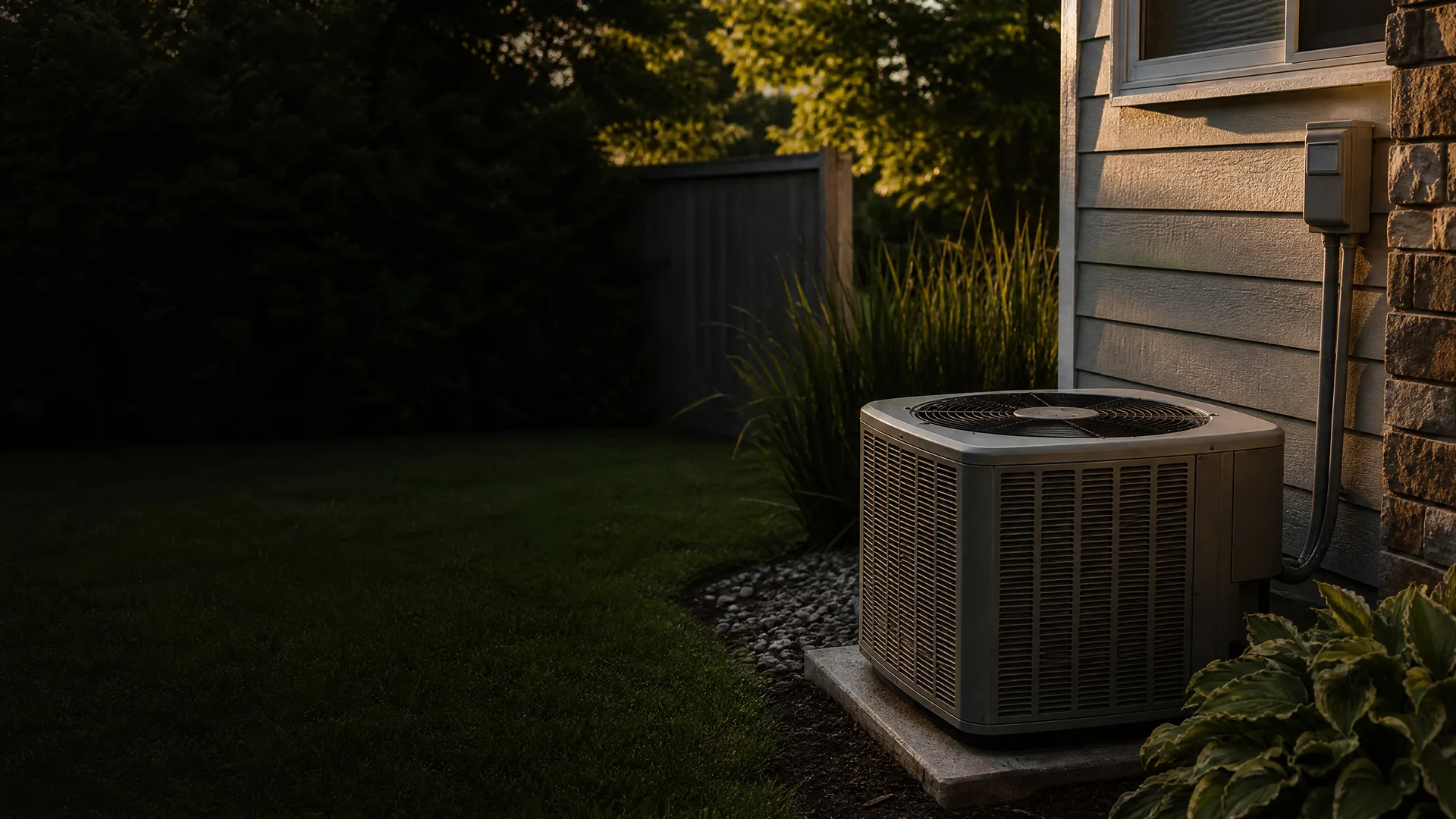
You're out on the back deck around seven, the sun still up but low over the trees, and that's when you notice the quiet. The condenser box by the fence is running, you can hear the compressor humming inside it, but the fan on top isn't spinning. It's just sitting there behind the grille, still, while the unit keeps drawing power next to you. A few days back it was making a rattle every time it kicked on. Now there's no rattle. Just the hum, and the still blades, and the evening getting warmer inside the house behind you.


A Washington County summer holds a dew point around 66°F, from the National Weather Service, which is the kind of air that sits on your skin and doesn't let go. Your AC has to pull that moisture out before the house feels right, so the compressor and blower run long stretches instead of short cycles. A unit working that hard shows you its wear faster. A fan blade with a little play in it, a panel that isn't quite seated, a blower bearing starting to go, all of it makes more noise under a long, heavy load than it would on a mild, dry day. If your AC's been loud lately, this is the stretch of weather that would bring it out.
NASA POWER T2MDEW


What the Noise Comes Down To
- A loose panel or a worn bearing is the usual cause, and both get worse the longer the unit keeps running.
- Finding the source takes listening first, then checking screws, fan blades and bearings before anything gets replaced.
- Left alone, a rattle can turn into a bent blade and a squeal can take the motor out with it.
- A local contractor who services this equipment all summer knows which of these noises to check first.
- One contractor takes the call, so you deal with a single visit instead of fielding several estimates.
- The noise itself tells you the unit is still running, which gives you some room to get it looked at.
A loud AC is telling you something specific, not just that it's unhappy. A rattle means a panel or fan blade is loose. A squeal means a bearing is wearing out in the blower motor. Banging means something has come loose inside and is hitting a part it shouldn't. None of these fix themselves, and all of them get more expensive the longer the unit runs this way. A loose panel turns into a bent blade. A worn bearing takes the motor with it. The fix starts with listening, not guessing, which is why a tech checks screws, fan blades and bearings before replacing anything.
What works in your favor is that the unit is still running. A noisy AC in a Fayetteville summer is not a dead AC, and that gives you room to get it looked at before it quits on you entirely. What helps more is who looks at it. Someone who services this kind of equipment all summer in Washington County has heard this exact rattle and this exact squeal more times than you have, and knows which one usually turns out to be the panel and which one is the bearing. You're matched with one contractor, local to the area, so you're not stuck comparing three estimates or waiting on callbacks from companies that don't know your unit. One visit, one answer, and you know where you stand with your AC.





Hand off the air conditioner problem
The pro who gets in touch is licensed in Arkansas and works in Washington County.
Sending the form costs nothing.